
I’m so over this.

On the whole, the news is good. My PSA just barely bumped up from 0.94 ng/mL in January to 0.95 ng/mL in March and, taking the last five readings, that increased my PSA doubling time from 7.7 months to 10 months.
The PSMA PET scan revealed “no evidence of prostate cancer or metastatic disease.”
So, if the news is good, why am I “so over this?”
I was really hoping that this third PSMA PET scan would bring some clarity as to where the cancer was located so we could know how to proceed—even if it meant revealing metastatic disease. It’s frustrating because we know the cancer is somewhere and because we know the PSA almost tripled between 19 January 2024 and 16 January 2025, but we don’t have enough information to do anything about it. It’s just more waiting in limbo.
Of course, having had three PSMA PET scans all turn up negative makes me question if I’m in that “lucky” category of ten percent of patients whose prostate cancer doesn’t express PSMA, making the scans useless for me. It’s something that I’ll definitely discuss with the doctor at my next appointment on 1 April 2025. I vaguely recall that there’s some sort of genomic test that may be able to assess if I really do fall into that ten percent. I’ll have to do some research on that.
Maybe, too, I’ve placed too much faith in the scan’s ability to detect anything at my PSA level. But with a PSA level hovering around 1.0 ng/mL I thought we would have a decent chance of detecting something (chart below).
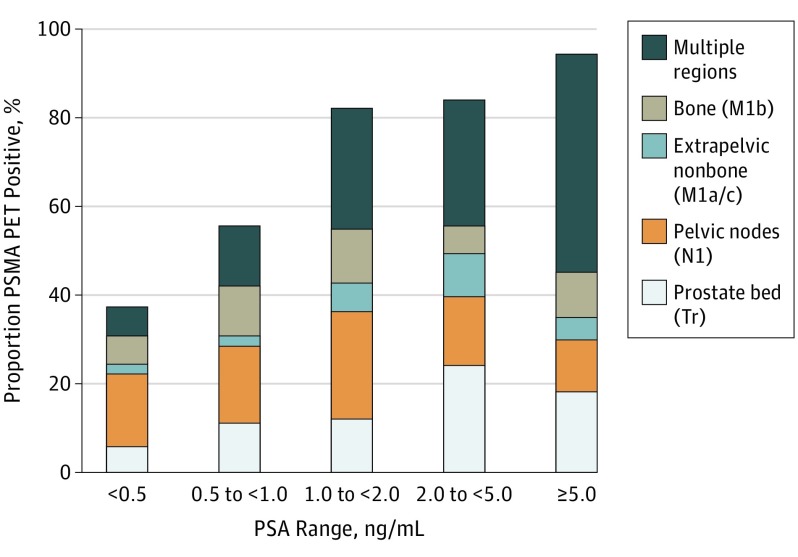
Needless to say, I’m truly glad that my PSA didn’t rocket even higher and that my scan didn’t light up like Times Square. Having definitive answers, though, would be the icing on the cake.
As far as the PSMA PET scan itself, it was pretty easy and took two hours to go through the entire process. I was instructed to drink 500 ml of water starting 2 hours before the scheduled scan time, and that was the only preparation needed.
I arrived at the hospital at 8 a.m. and was brought back to a radiation-proofed exam room where the technician started and IV at around 8:15 a.m. The 68Ga tracer was ready for injection around 8:40 a.m.
Around 9:30 a.m., the technician brought me back to the scanner where I got positioned on the bed and we began the scan which took 45 minutes. The scanner was very quiet (I could have dozed off) and large enough that it wasn’t claustrophobic. I was out of there by 10:15 a.m. and on my way home. Piece of cake.
On a related note, this was the longest it’s ever taken me to get the PSA test results posted online (hence the delay in this post). I actually called the clinic to get them over the phone because they still weren’t available online today (Thursday). The nurse I spoke with was very helpful and said, “We’re facing staffing issues and, well…” stopping herself in mid-sentence, probably remembering that the call was being recorded and not wanting to make a statement about the current environment for VA employees at the moment. I fear that this may be a precursor of things to come.
Be well!
 Dan's Journey through Prostate Cancer
Hey Dan, stoked to hear about the scan result and increased doubling time! Got to take the wins when you can. Even with no bad news this devil still messes with your head. Cheers, Phil
LikeLike
Thanks, Phil. I appreciate it. I know that this is good news all the way around. It’s the engineer / analyst in me that wants more data. 🙂
I hope you’re doing well.
Dan
LikeLike
Hi Dan, great news that you’re PSA increase is marginal. You say in your blog that “you know” that cancer is in there somewhere. But do you? Elevated PSA is not always caused by prostate cancer. PSA and PMSA are proxy indicators of cancer. Not first level evidence of cancerous cells. I fully understand your desire to locate the source of your rising PSA and how frustrating that 3 PSMA PET scans have all come out negative. Your explanation that it might be a non PSMA expressing version of PCa is also logical. I will follow with interest your efforts to find out if this is so. Thanks as always Dan for sharing your journey.
LikeLike
Hi Charles,
You raise an interesting question: Do we really know? I’m open to hearing your thoughts on what else it may be.
Early in my PSA recurrence, my doctors and I talked about whether it could be the result of some prostate tissue left behind during the surgery. The consensus was that, had that been the case, it would have been unlikely that I would have had nearly five years of undetectable readings, as the tissue would have been there all along expressing some level of PSA.
It will be interesting what this doctor says may be the cause on 1 April. I’ll keep everyone posted.
Dan
LikeLike
Hi Dan
Any chance you could try pelvic lymph node radiation at this point. Not sure if previous salvage precludes this or if it unwise for any number of other reasons. Just an idea.
LikeLike
Hi Rob,
Thanks for your comment. It’s something that I’ll discuss, but from previous discussions, it sounded as though that would not be a recommended course of action because of the risks of further damage to the pelvic region. I already had evidence of mild radiation proctitis from the first attempt, and I would be really reluctant to further aggravate that. If a scan revealed which nodes were problematic, it may be easier to determine whether to zap again or not.
LikeLike
Dan
Another idea: You might consider an Axumin PET scan if you are concerned your PC might be PSMA negative. I think at 1.0 they find something 80% of the time. I’d double check that number.
LikeLike
Hi Rob,
Yes, that’s on my list of things to discuss next Tuesday. Axumin or Choline PET scans may work for me.
You’re in the ballpark on the number for Axumin scans. I found it shown as 73% with PSAs between 1 and 2. For the Choline, it’s only 43% for PSAs between 1 and 2.
Thanks again.
LikeLike