Day 2,747 – Side Effects of Salvage Radiation Therapy

During my conversation with the radiation oncologist on Thursday, a big part of the discussion was on the long-term side effects of salvage radiation therapy. He stated that the probability of long-term urinary or rectal side effects was “in the single digits.” That reinforced my own understanding, but after the meeting, it occurred to me that we didn’t talk about the severity of those side effects in any detail.

I fired off an email to him on Friday asking, in essence, of those with long-term urinary and rectal side effects, what percent of those are mild, moderate, or severe?

He replied in a matter of hours and said that he couldn’t respond using the terminology in my email (I gave him definitions of what each of those meant in my own mind). Instead, he referred me to the Common Terminology Criteria for Adverse Events (CTCAE) used in standardizing terminology used in research across the globe. He referred me to “cystitis” and “proctitis” to see their definitions for grades 1 through 5. (Grade 1 was the least impactful; Grade 5 was typically death.)

The doctor also shared side effect data directly pulled from the manuscripts of 3 major randomized trials in post-prostatectomy patients. He didn’t provide the links—just the text—so I used the Google machine to come up with the links/articles. It’s interesting to note that all three are focused more on adjuvant radiation therapy than salvage therapy, but I suppose getting zapped for one is pretty much the same as getting zapped for the other.


Bolla et al, Lancet, Vol 366, Aug 2005

Late effects of rectal and bladder grade 3 or higher were only slightly increased in the XRT group vs. the observation group: 4.2% vs. 2.6%.

Wiegel et al, JCO, 2009

There was only one event of grade 3 toxicity (bladder). No grade 4 events were recorded. There were three events (2%) for grade 2 genitourinary adverse effects in the RT arm compared with none in the other arms. In addition, two grade 2 GI adverse effects (1.4%) were seen in the RT arm compared with none in the other arms.

It was interesting to note that the doctor omitted the second half of that paragraph from the original study:

Altogether, the cumulative rate of adverse effects for bladder and rectum (≥ grade 1) was 21.9% in the RT arm and 3.7% in the wait-and-see group (P < .0001; Appendix Fig A2, online only). One urethral stricture occurred in arm A and two occurred in arm B. Incontinence was not assessed, because it is not mentioned in the RTOG/EORTC scoring scheme.

Thompson et al, J Urology, 2009

We conducted a companion quality of life study in 217 men randomized to S8794 with assessments at baseline, 6 weeks, 6 months and annually for 5 years. A strength of this analysis was the inclusion of a 6-week assessment, designed to capture the side effects of radiotherapy at their peak. Tenderness and urgency of bowel movements were significantly more common at the 6-week point (47% vs 5%) in the radiotherapy group but by 2 years there was little difference between the groups. Urinary frequency was more commonly seen in the radiation group but there was no difference in the rate of erectile dysfunction (common in both groups) between groups. Global assessment of quality of life, while initially worse in the adjuvant radiotherapy group, became similar by year 2 and was increasingly superior in the radiotherapy group during the following 3 years. This gradual switch toward a superior quality of life in the adjuvant radiotherapy group should be examined in the context of the increased rates of PSA recurrence, salvage radiotherapy and hormonal therapy in the observation group, all of which have negative impacts on quality of life.

I’ve only skimmed the full studies at the moment, and I’ll come back to them in a day or two. On the surface, however, the numbers have eased my fear of long-term side effects a tad.

Right now, I just need to get away from the topic for a few hours and have some fun. Time to go out and play…

Stay tuned.

Day 2,745 – Conversation with the R.O.

When I was in 7th grade, I had to give a presentation on my science project, an erupting volcano, and I was so anxious about the presentation that I became physically ill and erupted myself. Not pretty. While I didn’t get physically ill today, the feeling was almost the same as I waited to see the radiation oncologist. It’s silly, I know. But it was very real.

In a nutshell, his recommendation was to start salvage radiation therapy.

The R.O. is a Navy captain medical officer, and we spent nearly forty-five minutes going over my case (which I truly appreciated). He took control of the conversation from the outset, explaining the options and consequences of each. I could tell that he had given this little presentation once or twice before. Once we got through that, we did have a real conversation. Some key points:

  • He disagreed with the notion that the increasing PSA is from residual benign prostate tissue left behind.
  • He was confident that the cancer would be in the prostate bed based on my numbers and statistics.
  • He talked about the differing definitions of biochemical recurrence, saying that the American Urological Association (AUA) and American Society for Radiation Oncology (ASTRO) use the 0.2 ng/ml threshold, but the National Comprehensive Cancer Network (NCCN) defines recurrence as a detectable PSA with two consecutive increases. My case meets the NCCN definition.
  • Continued surveillance is a viable option for me given my numbers and PSA doubling time.
  • We talked about the short and long-term side effects of radiation therapy: urinary control, sexual function and bowel control. His estimate the probability of long-term quality of life-impacting side effects in any of the three areas to be in the “single digits.”
  • He reminded me of selection bias when talking to other patients or bloggers about their side effect experiences. Yes, their experiences are very real, but for each person in an online forum, there are many others outside the forum who are leading productive, acceptable lives.
  • If we were to do salvage radiation therapy now with my PSA under 0.2 ng/ml, he put the probability of me having no evidence of disease five years from now at seventy-five percent. If we wait until my PSA is above 0.2 ng/ml, that number decreases.
  • Newer scanning technologies weren’t likely to pick up anything at my current PSA levels, yet he was open to the idea of them if it gave me peace of mind.
  • With my numbers, there is no reason to radiate the pelvic lymph nodes or use androgen deprivation therapy (ADT).
  • He was open to waiting until the August PSA results to see what they revealed before making a decision.

It was a good conversation, but I’m sorry to say that I don’t know that there was a lot of new information for me there that would tip the scale either way. The doctor wasn’t pushy in one direction or the other, saying that it was equally reasonable for me to continue surveillance or for me to begin salvage radiation therapy. The choice is mine. About the only thing he was adamant about was not starting ADT, and I’m in perfect agreement with him on that.

I did learn one really interesting thing, however. The reason that the VA Medical Center referred me to Naval Medical Center San Diego has to do with geology. Apparently VA Medical Center San Diego (La Jolla) was built sufficiently close to a geological fault line that they couldn’t build a radiation “bunker” that would be safe in the event of an earthquake.

What’s next for me? A ton of thinking, reflecting, and reevaluating.

Enough for now. I’m spent.

Month 90 – A Date with the R.O.

The week after my visit with the urologist last month, I had to relocate my office at work temporarily while the facilities team upgrades the HVAC system in our permanent offices. As I was setting up my new desk, I glanced up and saw this pinned to the bulletin board, apparently left by the previous occupant:

IMG_20180501_164755468_HDR (1)

Coincidence? Yep. But the timing couldn’t have been better.

I do believe that a positive outlook is helpful in situations like this, but with a healthy dose of reality thrown in for good measure. We can all “do our worst” in combating this disease, but the reality is that the cancer is in the driver’s seat. Yes, we can be proactive in doing our research and selecting our path, but we’re always reacting to the latest test result or the efficacy of the last treatment option.

Me doing my “worst” in the last three weeks has been slogging my way through the Veterans Affairs (VA) administrative logjams to get my appointment scheduled with the radiation oncologist. I finally got my appointment set up yesterday.

In a nutshell, the urologist forgot to hit the “submit” button for the referral. It took three weeks of emails and phone calls to figure that out, but we made it. The urologist was truly apologetic in his email to me. I get it. We’ve all made similar blunders. No harm, no foul.

My appointment is next Thursday, 17 May 2018, but there was a surprising twist in it.

All of my appointments with the urologists have been at the VA Medical Center in La Jolla (San Diego), and I was fully expecting my appointment with the radiation oncologist to be there as well. After all, it is the preeminent VA medical facility on the West Coast. Silly me.

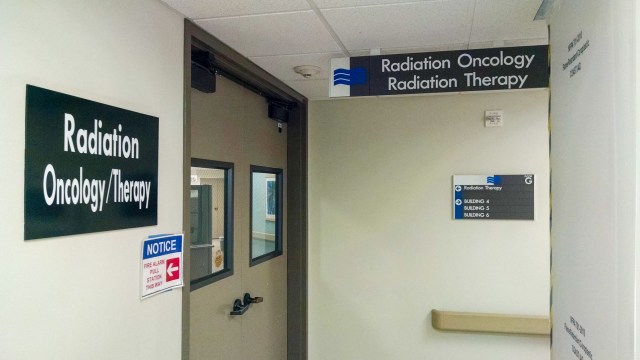
The appointment is at Naval Medical Center San Diego. The twist? I work at Naval Medical Center San Diego—seventy-five steps (I counted) from the radiation oncology department. I pass the department twice a day on my way to or from my car, and I always thought to myself as I passed, “Someday I may be in a place like this.” Little did I know that I would be in that specific place!

Of course, the first thing we need to do is answer a boatload of questions before making the decision to get zapped. That’s the purpose of this initial consult, so I’ll be working on that list this weekend and next week.

Stay tuned.

Medical Xpress: Research finds ‘Achilles heel’ for aggressive prostate cancer

Here’s an interesting article that shows promise in the treatment of advanced prostate cancer that popped up in one of my news feeds.

Medical Xpress: Research finds ‘Achilles heel’ for aggressive prostate cancer.


Day 2,722 – No Probability for Me

I’m one of those people who always thinks of a snappy comeback—three days after the conversation.

Over the weekend, I reflected on my conversation with the doctor last Thursday, and one of the things that I failed to ask was what probability he would assign to the notion that my increasing PSA is attributable to benign residual prostate tissue instead of returning cancer. I sent an email that asked specifically:

I fully understand that none of us have a crystal ball, but the one thing that I failed to ask Dr. is what he thought the probability of this being benign residual tissue was. Is it 5%? 25%? 50%? His experience gave him the insights to make the comment, so his experience may also be able to measure the likelihood as well.

To which he replied:

I’m afraid I am not able to assign a percentage likelihood to the chance that any residual tissue is benign. I can only really extrapolate from the rate of change in the PSA. The longer it took to be detectable and the slower it rises, the more it seems likely to be a bit of benign tissue. Either way, it is those lab values and their pattern that will help to guide treatment. If it rises quickly then will treat, since a) that pattern is more likely cancer, and b) if it’s not cancer it is acting like cancer and the stakes are too high to disregard even with a high % prediction at this point that the tissue is benign.

Hope that helps!

Dr.

His comment, “…b) if it’s not cancer it is acting like cancer and the stakes are too high to disregard even with a high % prediction at this point that the tissue is benign,” seems to be all over the place and contradicts his opening statement of not being “able to assign a percentage likelihood.” Hmmm…

So that was an interesting little exercise. I really didn’t expect him to come back with a specific number, but I thought I’d ask anyway. I don’t know that his answer convincingly persuades me one way or the other, but it does allow me to throw a tad more weight behind his theory that this is benign. A tad.

Bottom line: The only thing we know with any certainty is that my PSA continues to climb. Beyond that, it’s all a freaking guessing game.

On a related note, I’ve yet to hear from the radiation oncology department with an appointment for me. If I don’t hear from them tomorrow or Thursday (a crazy day at work for me), I’ll try to call on Friday to get on the calendar.


UPDATE:

About an hour after posting this, I came across this little gem of an article from 2005:

The presence of benign prostatic glandular tissue at surgical margins does not predict PSA recurrence

Key points:

We conclude that the presence of benign prostatic tissue at the surgical margins is not associated with adverse prognostic features and does not have prognostic relevance; therefore, we do not advocate reporting the presence of benign prostatic tissue at the inked margins as a standard part of the surgical pathology report on prostatectomy specimens.

Because benign epithelium at surgical margins is not correlated with postoperative PSA rises, postoperative PSA increases should in most cases continue to be considered “biochemical failure”.

Obviously, that’s not good news and certainly warrants more research.

This article from 2013 calls a few things into question:

Benign Prostate Glandular Tissue at Radical Prostatectomy Surgical Margins

Key point:

The most interesting finding of this study is the identification of Benign Glands at the Surgical Margins (BGM) after both Open Radical Prostatectomy (ORP) and Robot Assisted Laproscopic Radical Prostatectomy (RALRP) was not associated with recurrence, either biochemical or clinical, during a median follow-up interval of 49 months after ORP and 28 months after RALRP.

Extending followup further should clarify whether BGM leads to low, detectable levels of PSA that may not meet threshold for defining biochemical failure. This may be particularly relevant with the widespread availability of ultra-sensitive PSA assays. The routine use of ultra-sensitive tests after treatment has not been validated and remains controversial in clinical practice, and may be particularly true in patients at low risk of disease recurrence and potentially in those with BGM.

Within our cohort, longer follow-up may reveal detectable levels of PSA associated with BGM that may not reflect actual prostate cancer recurrence but rather a clinically benign elevation of PSA.

In other words, there’s more research to be done.

Day 2,717 – The Discussion

I hate this flippin’ disease.

My discussion with my urologist went pretty much exactly as I suspected it would, but with a few twists to screw with my mind a little. One of those little twists, however, happened much earlier than the meeting.

This morning as I was shaving, there was this strong sense of fear that hit me, tying my stomach in knots. That was completely unexpected and unfounded because I had a good idea of what was going to happen with the doctor. Even so, it was something that took control and definitely set my mood for the day.

When the doctor entered the exam room, I told him about my propensity to just verbally vomit all over the doctors before they even had a chance to explain their interpretation of my results. I shut up and let him talk away (with my battery of questions at the ready on my lap).

Pretty much everything that he said were things that I already knew:

  • The increasing PSA is a concern, but the slow rate of increase is a good thing.
  • That salvage radiotherapy would be the likely next step.
  • Given my pathology and history, it’s likely that the cancer is still in the prostate fossa.
  • Starting salvage radiotherapy earlier rather than later has typically shown to have better outcomes.
  • We have no guarantee of knowing where the cancer is at, so the radiotherapy may be ineffective.
  • Current imaging technologies aren’t good enough to detect the cancer’s location.
  • There’s no cut-and-dry set of numbers that would dictate specific actions.

The one kicker that knocked me for a loop was something that he said as we were reviewing my PSA tracking chart (I had to bring a copy of that, of course). He did mention the possibility that what we’re tracking may actually be benign prostatic tissue left behind that’s causing the PSA to rise. His reasoning was the fact that it took 54 months for the PSA to become detectable again and its slow rise ever since. He suspected that if the cancer was returning, the PSA would be climbing more rapidly. That, of course, would be great news. He didn’t assign a probability to his theory being right, however.

He did ask if I would be open to a referral to a radiation oncologist to at least begin the discussion and get educated. I said that, if he hadn’t suggested it, I was going to request it, so, yes, I was open to the referral. I don’t have an appointment on the calendar for that yet—they should call in the next few days.

I did mention the PSMA imaging trial that’s going on at UCLA and he was supportive of me looking into it. He cautioned, though that it is a trial and there’s no way to know yet how effective it may be. To be honest, it’s been a while since I looked at the trial page and I’m not sure that I would qualify to participate if it’s still ongoing. Something to dig into.

Lastly, he said there’s no need for urgent action at the moment. We’ll continue the four-month PSA test cycle for now. That will have me in the lab the first week of August.

When you get your care through the Veterans Administration (VA), as I do, you rarely see the same doctor twice. I mentioned that to this urologist and commented that, in a way, it’s a good thing because I’m getting multiple opinions and perspectives. He was taken aback by that comment, saying, “That’s a charitable view. I usually hear the opposite.”

He’s the second doctor who’s mentioned the possibility of this being nothing more than benign prostate tissue left behind that’s causing the PSA to return and rise. Perhaps I need to put a little more stock in that theory. But after spending two years wrapping my head around the notion that the cancer is returning—a mentally and emotionally exhausting exercise—when you hear something like this, it really screws with your mind. Or at least it does mine. It’s one more variable added to an ocean of uncertainty when you’re desperately seeking solid land.

The good thing is that I have time, and time may bring a little more clarity on which to base a decision at some point in the future. In the meantime, I’ll just don my kapok life preserver and bob around in that ocean of uncertainty reflecting on how much I hate this flippin’ disease. (Yes, I’m dating myself with the kapok reference.)


Day 2,710 – Let’s Talk

If you aren’t pushing your personal boundaries, you aren’t living, right? Well, tonight I tried something that I’ve never done before.

I was the guest speaker at the Riverside (California) Medical Clinic Charitable Foundation’s monthly Prostate Cancer Family Support Group meeting. (Yes, I’ve spoken in front of groups before, but never about prostate cancer.)

I didn’t want to say anything about it in yesterday’s post in case it turned out to be an unmitigated snooze-fest. It didn’t. (Whew!)

A special thank  you to Linda, Megan, and Briana for discovering my blog, extending the invitation, coordinating the visit, and making me feel welcome. An even bigger thank you to the members of the support group for allowing me to share my story and for being engaged in the discussion. I wish you only the best as you travel down your own path.

Oh. I’m sorry to report that only one of the three awesome chocolate chip cookies survived the drive back to San Diego.

Thanks again!

—Dan

Riverside Medical Clinic

Month 89 – Moving Forward

I wasn’t expecting that.

You would have thought that, with me confidently predicting that my latest PSA number would climb, I would have been relatively okay after getting the results Thursday night. Not so. Friday, I plunged into a deep funk, and my ability to concentrate at work dropped to a 2 or 3 on a scale of 10. Not good.

To combat the funk Saturday, I distracted myself by going down a relatively mindless rabbit hole on YouTube. (I know, not my proudest moment, but it worked.) One of the videos that I watch was from a young landscape photographer, Dave Morrow, that was entitled, How Quitting Social Media Changed My Life & Photography. That piqued my interest, so I spent 11 minutes watching it (video below).

As a bit of background, I was really opposed to joining Facebook and other social media years ago. I successfully resisted joining despite pressure from family and friends. In fact, this very blog arose from my disdain for Facebook yet wanting to be able to keep everyone informed about my situation.

But when I started working at the museum, we had a Facebook page for our volunteers and, as volunteer coordinator, I thought it was important to understand how to use it. I set up my own Facebook account as a playground to learn. That was four years ago, and I have to admit that I’ve been sucked into the Facebook vortex over time, spending more hours on it than I should.

The key takeaway for me in Dave’s video was when he said that he took all of the time and energy that he put into social media and devoted it to the things he enjoys and is passionate about instead. That was one of those “Ah-ha!” moments that we all knew about but had to relearn.

Regular readers of this blog will know that one of my favorite things to do is throw my camera in my car and drive. That’s precisely what I did on Sunday and, like the YouTube marathon, it, too, chased away my funk as I took a one and a half mile midday hike in the Anza-Borrego Desert State Park. (Perhaps not the wisest idea in the 90° F / 32° C heat.)

Tonight, rather than heading directly home from the office and hopping on my tablet to get caught up on all the social media postings, I opted to take an hour-long stroll up and down the beach, trousers rolled up to the knees, barefoot, ankle-deep in the incoming surf. It was delightful. (Note to self: Throw a pair of shorts in the trunk so I don’t look so geeky in trousers on the beach. Just a thought!)

I haven’t been on social media since Saturday—it’s been quite refreshing—and I’ve followed Dave’s advice and used that time for more enjoyable endeavors. Yes, it’s been a bit of a challenge not to look on Facebook, but I’ve resisted so far. Will I completely delete my accounts? Time will tell. There has been some advantage in using social media to connect with old friends, to remain connected with those half a continent away, and to even connect with fellow prostate cancer patients.

Dave’s insights were more from a developing and growing his business perspective, but obviously, they could be applied in a personal setting as well. Disconnecting from social media allows me the time to move forward doing things that I enjoy—walking on the beach, hiking in the desert, or snapping a photo or two. Each of those help combat the emotional funk.

Who would have thought that a YouTube video about managing a photography business would have reminded us that we need to eliminate those things that don’t add value or bring joy to our lives, and focus on those things that do?

I wasn’t expecting that.

Day 2,703 – PSA Results

The bad news: My PSA continued its upward climb to 0.11 ng/ml. The good news: The rate of increase remained constant (and is still quite slow).

The result is exactly where my spiffy spreadsheet said it would be, so I’m not overly surprised. All that’s left to do now is wait for my appointment with the urologist on 19 April. I’ll have to do my best to let him speak a little before I assault him with my already prepared list of questions.

This result reinforces my belief that it’s time to bring a radiation oncologist into the discussion so I can get his or her perspective on salvage radiation therapy, especially regarding the risks of long-term side effects impacting quality of life and the likelihood of success.

More to come…

PSA 20180405

Month 88 – Ready for Next PSA Test

It’s not often that I want time to pass more quickly in order to get to my next PSA test, but this time it’s different for some reason. I’ve been really anxious to have 3 April roll around to get this over and done with. Perhaps it’s because I suspect that this test will be the tipping point that finally gets me into real decision-making mode.

Of course, I would prefer not to see my PSA continue its gradual climb, but I suspect that it will. My spiffy little spreadsheet predicts a value of 0.115 ng/ml, up from 0.10 ng/ml. Let’s see how accurate its predictive powers are.

On a related note, I’m fairing much better than I was in my last blog post. How did I manage the emotional turnaround? One word: Disconnect.

I disconnected from my prostate cancer forums and from the good old Google machine in an effort to maintain some semblance of sanity, and it worked. That doesn’t mean that I quit them altogether or didn’t read the occasional article that popped up in a news feed, but I stopped actively researching for now.

Sure, there hasn’t been a day that’s gone by where I haven’t thought about my predicament. That’s only normal. I just don’t dwell on it like I did four weeks ago, and that’s improved my mood and focus considerably. Depending on my PSA results (I should be able to retrieve them online on 5 or 6 April), my mood and ability to focus may go out the window again. My appointment with the urologist is on 19 April, and one point of discussion will be a referral to a radiation oncologist.

Between now and then, I’ll do my best to simply forget about it all. Wish me luck!