Fifteen Years

It’s been fifteen years since I was told those three little life-altering words on 11 November 2010: You have cancer.

The good news is that I’m still here and able to write about it. The bad news is that I’m still writing about it. (I want a refund.)

Fifteen years of being poked and prodded. Fifteen years of being scanned and zapped. Fifteen years of riding an emotional roller coaster waiting for the next test or scan result. Fifteen years of researching far more than I ever imagined researching. Fifteen years of making decisions that impact the quality and quantity of my life, and hoping they were the right choices.

In other words, fifteen years of fun. <sarcasm font>

On the positive side, it’s fifteen years of getting to know how strong I can be. It’s fifteen years of adapting to new circumstances and making the best of them. It’s fifteen years of learning to not look back and question decisions already made. It’s fifteen years of forming new relationships with those in the same boat. Most important, it’s fifteen years of waking up every morning and starting a new day when so many others with this disease didn’t get that option.

And, because I valued others with prostate cancer sharing their experiences, it’s fifteen years of telling my story via a silly little blog that I had no idea would keep going for this long. Mind-blowing. Helping others by sharing my story was my way of making lemonade out of lemons.

In three weeks I’ll have my next PSA test. Hopefully, with the follow-up appointment on 30 December, we can map out the next steps to keep me around for another fifteen years.

Finally, sincere thanks to every one who has supported me over the last fifteen years. I appreciate it more than you know.

Be well.

Header image: Milford Sound, New Zealand

Fourteen Years

Yep. It really has been fourteen years that I’ve been on this adventure. That’s a good thing considering that too many men don’t make it this far after their diagnosis. Of course, it would be better if none of us ever had to go down this path in the first place, but these are the cards that we’ve been dealt and we’re forced to soldier on.

In the past, I’ve railed against people who said that prostate cancer is an “easy cancer.” My views on that may be evolving over time into it being an easier cancer. Even that may not be an accurate way of describing it.

The treatment for other common cancers can be much more aggressive, adversely impacting quality life in much harsher ways much earlier on than some of the initial treatments for prostate cancer. With prostate cancer, you may have a snip-snip here or a zap-zap there and you’re on your merry way for years with a few possible side effects. With other cancers, you may have surgery, radiation, and chemotherapy all coming right out of the gate and, in many cases, your chances of making it to five years are quite low (see five-year survival charts below).

However, with prostate cancer you can be on this ride for decades before you get to the harsher advanced treatments like hormone therapy and chemotherapy. In the interim, though, you’re dealing with the physical impacts of early treatment (incontinence, impotence, etc.), as well as the psychological and emotional stress associated with each new PSA test result every three to twelve months over those same decades. Over time, both of those impacts—the physical and emotional—take their toll.

Don’t get me wrong. I am thankful that, out of all the cancers out there, I had to get the one with one of the highest survival rates of all of them. I guess I just want folks to know that it’s still cancer, and it’s cancer that you have to deal with—in ways big and small—on a daily basis for decades.

It may be easier, but it isn’t easy.

Answering Your Hormone Therapy Comments | #MarkScholzMD #AlexScholz

Here’s another informative video from the Prostate Cancer Research Institute with answers to many questions about hormone therapy. They have taken questions or comments from previous videos and provided answers.

If you don’t want to sit through the full 30 minutes, there are time stamps for each topic in the description of the video.

Day 5,097 – PSA Results

The trend formula on my Excel spreadsheet predicted that my PSA would come in at 0.69 ng/mL, and my PSA came in at exactly 0.69 ng/mL. Not too shabby.

To be honest, that’s a little better than I expected it to be, which I’m not complaining about. At least it hasn’t taken off like a Halloween bat out of Hell.

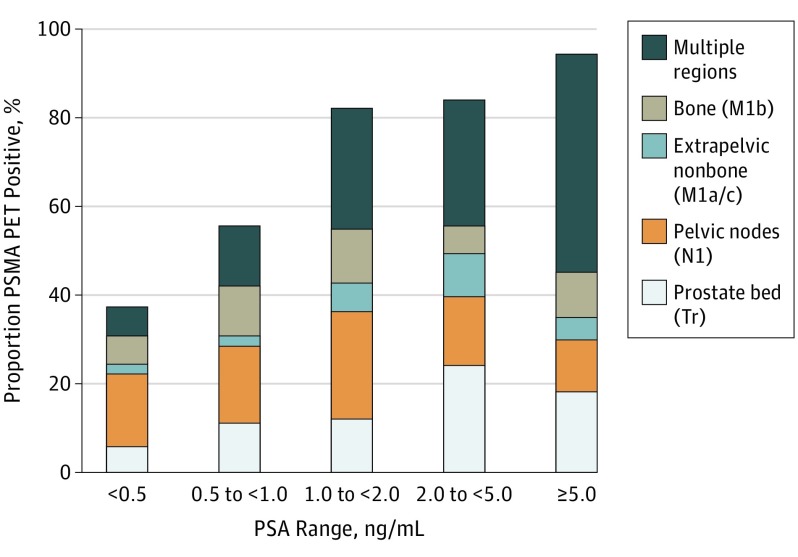
The one question that we’ll have to answer at the appointment with the urologist on 14 November is whether that level is high enough to warrant another PSMA PET scan to see if we can detect any hotspots that may be amenable to radiation. At my current PSA level, there’s about a 70% chance of detecting anything, but if we wait until the PSA is closer to 1.0 ng/mL, there’s a 90% chance of detection. Maybe we wait another three months and go from there? Or, maybe we go ahead with the scan now and I have cool images to include with my Christmas cards.

I’m guessing that that was a small enough increase—keeping my PSA at a low level—that we won’t have to worry about starting androgen deprivation therapy (ADT) quite yet. Of course, I could be wrong.

When I use my last five PSA tests over the last year to calculate PSA doubling time, the PSADT is 7.7 months.

Stay tuned.

PSA Chart since salvage radiation therapy
PSA Chart since diagnosis

Header image: Anza-Borrego Desert State Park, California

Month 162 – Urologist Visit

The short version from yesterday’s appointment with the urologist (who happens to be the Urology Department head):

Kick the proverbial can(cer) six months down the road and retest PSA then.

Generally speaking, I’m okay with that approach. I mean, really, what else is there to do at this point? We don’t have sufficient data points to make any definitive treatment decisions right now. Of course, I may feel differently after sleeping on this for a few nights.

I have to admit that it was a challenging meeting because the doctor just wanted to rapid-fire through all the discussion points and it was difficult to get my questions out. In the end, though, I prevailed.

She was blasé about the increase in my PSA, saying it went up “a little bit.” (A 41% increase in my mind is a tad beyond “a little bit,” but what do I know?) She didn’t see much value in doing another PSMA PET scan right now because a scan with a PSA of 0.52 ng/mL has about a 50-50 chance of detecting anything. That somewhat aligns with what the medical oncologist (MO) said in February—that it would be better to wait until my PSA was at least 0.7 or 0.8 before doing another scan.

My SWAG (scientific wild-assed guess) is that my PSA will be between 0.75 ng/mL and 1.1 ng/mL in November based on the average increases in my PSA over the last four readings and my PSA doubling time. (Bookmark this prediction for future reference! 😀)

We did talk about androgen deprivation therapy. Her biggest concern was that starting too early would just accelerate the eventual likelihood of resistance later on when ADT is needed the most, so she wouldn’t start ADT until there’s confirmed metastasis. (By comparison, the MO suggested holding off until my PSA hit 2.0 ng/mL.) I did ask if starting ADT early delays metastasis and she said it didn’t, which I thought was interesting.

We talked about whether it would be a monotherapy or a combination therapy, and she suspected we would start with just a monotherapy. She acknowledged that there are several studies out there showing that a combination therapy may lead to better outcomes but, in her mind, they weren’t persuasive enough to launch straight into combination therapy. However, she did say that there are certain circumstances where it may make sense, one of which was if the metastases was in the spine.

I asked about possible radiation of localized lesions and she was not all that enthusiastic about the idea. Her biggest concern was about going through radiation twice and whether that was a wise thing given what damage it may do to my body. “I’d have to defer to the radiation oncologist to make that assessment,” she said. Her fear was additional radiation damage / side effects, and I would have that same concern, too. I would have to consider very carefully zapping anywhere in the pelvic area again given the changes I have already experienced in my bowel habits.

Even if the scan showed one or two lesions that could be zapped, she would also start ADT because “it’s pretty much guaranteed that there would be cancer elsewhere that didn’t light up on the scan.” That makes sense.

Lastly, given where I’m at in this advanced prostate cancer no-man’s land, I was curious how she would label or stage my cancer. With no evidence of metastases on the last scan, she would still have me at Stage 2. (See the American Cancer Society staging of prostate cancer HERE.)

Of course, in my mind, I turned to the actual definition of metastasis:

the spread of a disease-producing agency (such as cancer cells) from the initial or primary site of disease to another part of the body

I don’t have a prostate (initial or primary site) but I do have evidence of cancer, so it must be in “another part of the body.” By that definition, it must mean that I’m metastatic, right? (Yeah, I know… Nothing in the prostate cancer world is that clear.)

I asked the question about staging more as an academic exercise because it really doesn’t matter much what the label or stage is. All I know is that I’m living with this bug growing inside me.


One of my blog followers, Phil, recently commented that his oncologist considered prostate cancer to be more of a chronic illness than a terminal illness, and that stuck with me. I mentioned that to the doctor, and she embraced that view wholeheartedly, telling me that patients like me can be kept around for many years—even decades—and the disease can be managed like hypertension or diabetes.

Intellectually, I already knew that. But, after 13+ years, it’s quite the mental leap to jump from, “I have the Big C and it continues to grow unabated,” to, “Cancer, schmancer. It’s like arthritis in my big toe. No big deal.” But it is a leap I’m trying to make.

You would expect that, after 13+ years of testing, waiting for results, reviewing results, and planning next steps, I’d be used to it by now. It’s routine. But I’m finding it to be more and more emotionally draining with each cycle as the uncertainty drags on. Perhaps it’s because I’m coming to terms with failed treatments when I had hopes for better outcomes, or perhaps it’s because I’m back in the wait-and-see mode. Or maybe it’s just the cumulative effect of being on this roller coaster for so long.

On the positive side, I know that I’ve been blessed. Many fellow prostate cancer patients would love to have their PSAs be at my level; my quality of life is pretty good considering all that my body has been through; and—most important—I’m still here 13+ years after diagnosis.


On a somewhat related note, I finally got my baseline testosterone results back: 424 ng/dL. That was taken almost two years to the day after receiving my six-month Eligard shot in advance of salvage radiation therapy, so I’m guessing that any effect the Eligard may have had on my testosterone level has worn off by now.

From what I can tell, that’s a decent / normal number for a 66-year-old guy.

At least we have a starting point for reference now.


Well, that’s it for this post. Time to go out and play for six months. Be well!


What’s next:

  • Week of 28 October – Get PSA test
  • 4 November – Physical with primary care physician
  • 14 November – Appointment with urologist

Header Image: La Jolla Coast, San Diego, California

Day 4,923 – PSA Results

No surprise here. In my spreadsheet, I put a placeholder value of 0.50 ng/mL for this PSA test based on the previous trend, and the actual result came in slightly higher at 0.52 ng/mL.

The PSA Doubling Time is dropping as well. Using the last five readings and the Memorial Sloan-Kettering PSA Doubling Time calculator, my PSADT was:

  • 6.7 months on 6 December 2023
  • 6.2 months on 19 January 2024
  • 5.1 months on 1 May 2024

It seems safe to say that the salvage radiation therapy failed to do the trick.

I am trying to describe my reaction to this hour-old news. I guess words that I might use would be: numb, indifferent, resigned. I don’t know. It’s a bit weird. I certainly had zero expectation that my PSA would go down or even hold steady given the previous trend.

You may recall the conversation with the medical oncologist suggested that we monitor and do another PSMA PET scan in six months, which would make it August. The question now is, based on these results, do we stick with that plan? Or do we move to the discussion on the type of androgen deprivation therapy and the timing of ADT?

I did ask the phlebotomist if he was drawing blood for a testosterone baseline test and he said yes. I don’t see the results posted online yet (my record is still going through its once-a-day update as I type this).

Well, it’s after midnight. I’ll sleep on this and perhaps I’ll be a tad more focused in the morning after having processed this.


What’s next:

  • 9 May – Appointment with primary care physician (annual physical)
  • 14 May – Appointment with urologist

Header Image: Scenes from San Diego Bay, San Diego, California

Month 161 – Crappy Development

If you’ve been reading this blog from the beginning, you already know that no detail is spared in the telling of this prostate cancer tale. If you haven’t read some of the early, gory details, well, buckle up, Buttercup.

Let’s talk bowels and 💩.

LAST CHANCE. If you don’t want to follow along, check out my travel website HERE or my photography website HERE.


One of the known possible long-term side effects of radiation when it comes to prostate cancer is issues with your rectum and bowels, and those side effects can manifest themselves years after the radiation was completed. (It’s been 19 months since my last zapping session in August 2022.)

Something has changed with my bowels in the last few months, and I’m wondering if this is the beginning of those side effects.

The engineer in me is trying to evaluate different variables to see if these changes could be the result of something else.

As a baseline, I used to have one bowel movement a day in the morning and I was good for the day. Also, I’m a creature of habit, and my diet really hasn’t changed at all, so that’s likely not a contributing factor.

One other thing is the timing of the onset of my symptoms. It’s about the same time that I started my daily walking regimen in earnest in February. I doubt they’re related, but it is noteworthy.

So what’s different? Well:

  • About half the time, I’m now having two to three bowel movements a day. One recent day, there were five over the course of the entire day.
  • My stools have changed from well-formed “logs” to thin, soft “snakes” or “ropes” that tend to fall apart.
  • I find myself having short periods where I’m quite gassy and flatulent without any likely dietary cause (e.g., not eating frijoles for breakfast, lunch, and dinner).

The silver lining in this cloud is that I haven’t had any increases in bowel urgency, so this is quite manageable at the moment. I will admit, though, that there have been a few times when I’ve been on my daily walks when I felt the need to pass gas, and I felt I was on the edge of getting more than I bargained for if I did. Luckily, no accidents yet.

I haven’t done a ton of research on this yet, but a study out of Sweden, Salvage radiotherapy after radical prostatectomy: functional outcomes in the LAPPRO trial after 8-year follow-up, looked at the long-term side effects of salvage radiation therapy. The summary of their conclusions on bowel function:

Fecal leakage was more common after radiotherapy as found in answers to question about ‘accidentally leaked liquid stool’ with 4.5% in Radiotherapy group versus 2.6% in Control group, ‘accidentally leaked liquid stool’ once a week or daily, Odds ratio (95% CI): 1.90 [1.38; 2.62]), ‘mucus from anus’, 6.8% versus 1.5% (4.14 [2.98; 5.76]), ‘leakage of feces in clothes’, 5.6% versus 2.4%, (2.18 [1.18; 4.04]), respectively in Radiotherapy and Control groups (Figures 2, 3A and 3B and Tables S2 and S3 in the Supplement). Bleeding from the anus was more common after salvage radiotherapy, 8.6% versus 1.2% in control (3.21 [2.32; 4.44]) as was flatulence, 25% versus 14% (1.82 [1.40; 2.37]), whereas distress due to bowel symptoms did not differ, 7.8% versus 6% (1.27 [0.90; 1.80]). Defecation urgency was more common in the group given salvage radiotherapy as reported in answers to questions about need ‘to rush to the toilet’, 14% versus 5% (3.22 [2.46; 4.21]), ‘open your bowels again within 1 hour’, 17% versus 9.4% (1.53 [1.18; 1.98]). There was no statistically significant difference in ‘how often do your open your bowels’, 3% versus 2.5% (1.23 [0.92; 1.64]).

Carlsson, S., Bock, D., Lantz, A., Angenete, E., Koss Modig, K., Hugosson, J., Bjartell, A., Steineck, G., Wiklund, P., & Haglind, E. . (2023). Salvage radiotherapy after radical prostatectomy: functional outcomes in the LAPPRO trial after 8-year follow-up. Scandinavian Journal of Urology58, 11–19. https://doi.org/10.2340/sju.v58.7318

Another silver lining: no fecal leakage, mucus, or rectal bleeding so far. Woo-hoo!

Needless to say, this will be part of my conversation with my primary care physician on 9 May and with the urologist on 14 May. I’ll likely rope the radiation oncologist into the conversation, too.

I was reluctant to talk about this earlier because I wasn’t sure if this was a temporary thing or something longer term. This has been pretty persistent for about two months now, so I thought it was time to talk about it. As long as things don’t worsen, I can live with what’s happening right now (although I would prefer that I didn’t have to if I’m being perfectly honest).


I’ll have to admit that I’ve been feeling a general sense of anger and perhaps regret about this whole situation.

The source of those emotions isn’t from the side effects themselves, per se, but rather from this entire process that tends to move patients in the direction of what is considered to be overtreatment.

I may flesh this out in a longer, separate blog post one day, but when I see the likes of Dr. Scholz and others beginning to say, “Hmm. Maybe we should let the PSA rise so we can find out where the cancer is at before we start the treatments that could have life-long side effects adversely impacting the quality of life,” I get annoyed. Annoyed because I’m beginning to agree with that line of thought more and more, instead of the old, “It’s better to attack it while the PSA is low even though we don’t know exactly what’s going on.”

It’s frustrating because, my gut instinct all along was to delay until we knew where the cancer’s location, and I let the more rapid increases in my PSA, my shortening PSA doubling time, and the current “industry” guidance to act sooner rather than later get the better of me.

The frustration will continue as I move into the next chapter. I’ve been looking for studies on the best time to start androgen deprivation therapy (ADT) for someone in my situation and, from what I’ve seen so far, the guidance seems to run the full spectrum of starting early or delaying for years. Throw in the decision of whether it’s just ADT or ADT plus some sort of antiandrogen therapy, too.

I get that there are advances in research and technologies and that things are constantly changing. But at this point, I’d be happy for a clear path forward without adding additional side effects. (But I’m experienced and knowledgeable enough to know that’s just a pipe dream at this point.)

Rant over. Time to invest in some toilet paper company stock.


What’s next?

  • 1 May – PSA test
  • 9 May – Appointment with primary care (routine physical)
  • 14 May – Appointment with urologist.
  • TBD – Another PSMA PET scan if my PSA warrants it OR wait another three months for the next PSA test.