Day 5,095 – Let the Waiting Begin

I went for my PSA test this morning, so now the waiting begins for the results to be posted online. I suspect that I’ll be able to access them late Thursday night or Friday.

I also had about four or five other tubes of blood drawn (I can’t watch 🤢) for my annual physical with my primary care physician on 4 November. While there, I also got my high-dose flu shot for old geezers and the updated COVID vaccine. All of that turned me into veritable pin cushion this morning.

As much flak as the VA Healthcare system receives, I have to admit that I’m always impressed with my local clinic. No appointment was needed for either the lab work or the vaccines, and it took just 17 minutes from the time I checked in until my lab work was completed, and another seven minutes to get the vaccines. I was in and out in 24 minutes. I challenge civilian clinics to match that.

More to come soon.

Month 166 – Expanding My Audience

Between this prostate cancer blog and my travel blog, you’ve probably figured out that I enjoy the process of writing and sharing my experiences. While I’m no Pulitzer-prize winning author, a few people close to me have encouraged me to do something more formal—to “write a book.” I always thanked them for their compliment, and then gently set aside the notion of ever getting something published.

Until June.

Yes, I’ve been sitting on a little secret for almost three months. The editor of Cancer Health magazine came across my little ol’ blog and approached me to write an essay for their Voices column for their Fall 2024 issue of their magazine.

My initial reaction was one of surprise and intrigue and—if I’m being honest—a bit of anxiety. In the initial contact email, there wasn’t a ton of information about expectations, so I went to the website and looked at some of the archived Voices columns to see what might be involved. “Oh. I could do that.”

I went back to the editor and said, “I’m in.”

Prior to this, I had a vague understanding of the publishing process and knew that there would be some discussion about topics, length of the article, and deadlines. It would soon be followed by submitting drafts and digesting feedback. Also included in the exchange was a six-page contract covering usage rights and compensation.

I’m someone who’s better known for my spreadsheets than my writing, so when the editor read the final draft and said, “Wow… this one reads really great….Honestly, there’s very little I’d change in this…” I have to admit my chest puffed out a with a bit of pride.

After the magazine went live this week (hardcopy and online), I can now add “published author” to my résumé.

Is it a book? Nope. But we all start with baby steps, and a 500-word essay is my first step into the publishing world. Is this the beginning of something larger? Who knows. I enjoyed the whole process, and the editor did encourage future submissions. In the meantime, I’ll stick to self-publishing on my little ol’ blogs for now.

You may read the article here:

How to Navigate Conflicting Cancer Treatment Advice

Header Image: August Moonrise over San Diego, California skyline

Day 5,000

You know the nerd in me had to observe this milestone of being 5,000 days into this adventure of living with prostate cancer. 😂

In those 5,000 days, I have:

  • Learned more about prostate cancer and its treatment than I ever thought I would.
  • Had my emotions run from outright fear at diagnosis to elation with each undetectable PSA test after surgery back to fear as my PSA returned.
  • Adapted to my new normal with the side effects from surgery and radiation.
  • Shared my story in ways I never expected.
  • Learned who stepped up to provide support and who couldn’t do so for whatever reason.
  • Formed meaningful connections with fellow patients and caregivers from around the globe, and have been inspired by their stories.

That last point is important to me. Those readers who regularly engage with me, share your stories, and who offer your support have been a bright spot in this entire adventure, and I cannot thank you enough. Sadly, some of the men that I connected with over the years have succumbed to this insidious disease, and I miss our interactions.

Thank you again for putting up with my rantings for 5,000 days. Here’s hoping for 5,000 more.

—Dan

In case you’re wondering, 5,000 days equals:

  • 13 years, 8 months, and 9 days
  • 164 months and 9 days
  • 714 weeks and 2 days
  • 120,000 hours
  • 7,200,000 minutes
  • 432,000,000 seconds

Sleep better tonight knowing that. 🤓😂

Month 161 – Crappy Development

If you’ve been reading this blog from the beginning, you already know that no detail is spared in the telling of this prostate cancer tale. If you haven’t read some of the early, gory details, well, buckle up, Buttercup.

Let’s talk bowels and 💩.

LAST CHANCE. If you don’t want to follow along, check out my travel website HERE or my photography website HERE.


One of the known possible long-term side effects of radiation when it comes to prostate cancer is issues with your rectum and bowels, and those side effects can manifest themselves years after the radiation was completed. (It’s been 19 months since my last zapping session in August 2022.)

Something has changed with my bowels in the last few months, and I’m wondering if this is the beginning of those side effects.

The engineer in me is trying to evaluate different variables to see if these changes could be the result of something else.

As a baseline, I used to have one bowel movement a day in the morning and I was good for the day. Also, I’m a creature of habit, and my diet really hasn’t changed at all, so that’s likely not a contributing factor.

One other thing is the timing of the onset of my symptoms. It’s about the same time that I started my daily walking regimen in earnest in February. I doubt they’re related, but it is noteworthy.

So what’s different? Well:

  • About half the time, I’m now having two to three bowel movements a day. One recent day, there were five over the course of the entire day.
  • My stools have changed from well-formed “logs” to thin, soft “snakes” or “ropes” that tend to fall apart.
  • I find myself having short periods where I’m quite gassy and flatulent without any likely dietary cause (e.g., not eating frijoles for breakfast, lunch, and dinner).

The silver lining in this cloud is that I haven’t had any increases in bowel urgency, so this is quite manageable at the moment. I will admit, though, that there have been a few times when I’ve been on my daily walks when I felt the need to pass gas, and I felt I was on the edge of getting more than I bargained for if I did. Luckily, no accidents yet.

I haven’t done a ton of research on this yet, but a study out of Sweden, Salvage radiotherapy after radical prostatectomy: functional outcomes in the LAPPRO trial after 8-year follow-up, looked at the long-term side effects of salvage radiation therapy. The summary of their conclusions on bowel function:

Fecal leakage was more common after radiotherapy as found in answers to question about ‘accidentally leaked liquid stool’ with 4.5% in Radiotherapy group versus 2.6% in Control group, ‘accidentally leaked liquid stool’ once a week or daily, Odds ratio (95% CI): 1.90 [1.38; 2.62]), ‘mucus from anus’, 6.8% versus 1.5% (4.14 [2.98; 5.76]), ‘leakage of feces in clothes’, 5.6% versus 2.4%, (2.18 [1.18; 4.04]), respectively in Radiotherapy and Control groups (Figures 2, 3A and 3B and Tables S2 and S3 in the Supplement). Bleeding from the anus was more common after salvage radiotherapy, 8.6% versus 1.2% in control (3.21 [2.32; 4.44]) as was flatulence, 25% versus 14% (1.82 [1.40; 2.37]), whereas distress due to bowel symptoms did not differ, 7.8% versus 6% (1.27 [0.90; 1.80]). Defecation urgency was more common in the group given salvage radiotherapy as reported in answers to questions about need ‘to rush to the toilet’, 14% versus 5% (3.22 [2.46; 4.21]), ‘open your bowels again within 1 hour’, 17% versus 9.4% (1.53 [1.18; 1.98]). There was no statistically significant difference in ‘how often do your open your bowels’, 3% versus 2.5% (1.23 [0.92; 1.64]).

Carlsson, S., Bock, D., Lantz, A., Angenete, E., Koss Modig, K., Hugosson, J., Bjartell, A., Steineck, G., Wiklund, P., & Haglind, E. . (2023). Salvage radiotherapy after radical prostatectomy: functional outcomes in the LAPPRO trial after 8-year follow-up. Scandinavian Journal of Urology58, 11–19. https://doi.org/10.2340/sju.v58.7318

Another silver lining: no fecal leakage, mucus, or rectal bleeding so far. Woo-hoo!

Needless to say, this will be part of my conversation with my primary care physician on 9 May and with the urologist on 14 May. I’ll likely rope the radiation oncologist into the conversation, too.

I was reluctant to talk about this earlier because I wasn’t sure if this was a temporary thing or something longer term. This has been pretty persistent for about two months now, so I thought it was time to talk about it. As long as things don’t worsen, I can live with what’s happening right now (although I would prefer that I didn’t have to if I’m being perfectly honest).


I’ll have to admit that I’ve been feeling a general sense of anger and perhaps regret about this whole situation.

The source of those emotions isn’t from the side effects themselves, per se, but rather from this entire process that tends to move patients in the direction of what is considered to be overtreatment.

I may flesh this out in a longer, separate blog post one day, but when I see the likes of Dr. Scholz and others beginning to say, “Hmm. Maybe we should let the PSA rise so we can find out where the cancer is at before we start the treatments that could have life-long side effects adversely impacting the quality of life,” I get annoyed. Annoyed because I’m beginning to agree with that line of thought more and more, instead of the old, “It’s better to attack it while the PSA is low even though we don’t know exactly what’s going on.”

It’s frustrating because, my gut instinct all along was to delay until we knew where the cancer’s location, and I let the more rapid increases in my PSA, my shortening PSA doubling time, and the current “industry” guidance to act sooner rather than later get the better of me.

The frustration will continue as I move into the next chapter. I’ve been looking for studies on the best time to start androgen deprivation therapy (ADT) for someone in my situation and, from what I’ve seen so far, the guidance seems to run the full spectrum of starting early or delaying for years. Throw in the decision of whether it’s just ADT or ADT plus some sort of antiandrogen therapy, too.

I get that there are advances in research and technologies and that things are constantly changing. But at this point, I’d be happy for a clear path forward without adding additional side effects. (But I’m experienced and knowledgeable enough to know that’s just a pipe dream at this point.)

Rant over. Time to invest in some toilet paper company stock.


What’s next?

  • 1 May – PSA test
  • 9 May – Appointment with primary care (routine physical)
  • 14 May – Appointment with urologist.
  • TBD – Another PSMA PET scan if my PSA warrants it OR wait another three months for the next PSA test.

Day 4,880 – Full MO Report

My computer issues have been sorted, so here’s the full scoop behind my meeting with the medical oncologist (MO) on Tuesday.

The meeting started with a nurse practitioner (NP) which threw me for a bit of a loop and initial disappointment. Because this was my initial contact with the oncology team, we spent a bit of time reviewing my history and how we got here. She did say that she would bring the MO into the discussion once we went through the preliminaries.

The nurse had actually done a pretty thorough job of reviewing my file prior to the meeting, and was familiar with the recent bone scan and PSMA PET scan results. Her take on my situation was that we were somewhat in limbo with no signs of metastases anywhere, and that the path forward wasn’t so clear-cut. (That actually led to a brief discussion on how metastases is defined in the world of prostate cancer. She was of the school that it’s not metastatic until it shows up on scans, while I pressed and suggested that, because the prostate is gone and the cancer is somewhere, it must, by traditional definition, be metastatic.)

Once we were through with the initial screening, the nurse brought in the MO and introduced her to me. I did ask if she specialized in prostate cancer and she does not; she’s more of a general oncologist. She did say, however, that she reviewed my case with a genitourinary oncologist at the University of California San Diego (UCSD) the day before our meeting. That was a good to know (but not the same as having a seasoned prostate MO in the room).

At that point, the three of us started going down my checklist of questions.

We talked about whether there was value in delaying the start of any treatment until my PSA rose to a level where a scan would detect the location. In the preliminary screening, the NP seemed to be inclined to start the ADT before another PSMA PET scan, and she was a little surprised that the MO said we should do another scan in six months. The MO said that the scan may reveal lesions that could be spot radiated as a treatment option.

That led to me asking about whether there would be value in whole pelvic radiation and, again, without knowing the cancer’s location neither was a fan of pursuing that at this point. Even if we did know the location, they would defer that decision to the radiation oncologist (RO).

Because my PSA is so low (in relative terms), both seemed to be more inclined to start with just ADT and not a combination therapy of ADT plus antiandrogens. The MO acknowledged that the use of combination therapy could be more effective in controlling the cancer, but cautioned about the increased side effects from doing a combination therapy approach. She also mentioned that using combination therapy is generally reserved for when the cancer is more advanced. (I’m not sure that my research agrees with that thought.)

I believe in her discussion with the UCSD GU oncologist that they said they would probably hold off initiating hormone therapy until my PSA reached 2.0 ng/mL. I’m going to have to do a little research to see if that makes sense.

We talked about intermittent therapy and whether that would be appropriate, and the consensus was that, at my low PSA, I would be a good candidate for intermittent ADT. However, that would depend on my PSA doubling time and how my PSA responds to the ADT.

I did ask if cancer in the lymph nodes would be symptomatic and generally speaking, they said, it’s not. I asked because I had had a weird pressure sensation in my groin last month that was new. (Yes, I’m at that point where I ask myself if every new ache, pain, or sensation is related to the cancer when it pops up.)

They noted going through my record that there was no baseline testosterone test, so we all agreed that that would be helpful to have. The NP put the order in to have that done when I get my PSA tested on 1 May 2024.

The MO expressed concern about my recent cardiac work-ups after my October emergency room visit (nothing of substance was found). She reminded me that hormone therapy does have a small but real risk of increasing cardiac events.

In the last part of the meeting, I did ask if I’ll be seeing the same MO going forward, and the short answer was “indirectly.”

You’ve heard me talk before that one of the drawbacks of getting my care through the VA is that it’s a teaching hospital and that I rarely see the same physician/resident twice. It’s good that I get so many differing opinions, but it prevents me from building a long-term relationship with the doctor as well. Different residents will filter through the oncology department, but the MO I met with will be overseeing all of their cases behind the scenes, so she would be tangentially involved.

I was asking because I likened myself to being an orchestra conductor, coordinating the efforts between the urologists, radiation oncologist, my primary care physician, and now the medical oncologist. I was inquiring if she or anyone else at VA would take the lead on coordinating all of these discussions and treatment considerations. She did mention that they do have a “tumor board” that reviews much more advanced cases to map out coordinated treatment plans, but because I don’t have any substantial tumors in the scans, my case wouldn’t come up for review.

Interesting, though, was the fact that the NP and MO both viewed this meeting as me getting a second opinion instead of a hand-off of my case from the urology department to the oncology department. From their perspective, the urology department still has the lead on my case until I decide to move forward with hormone therapy.

One thing the NP brought up early in the conversation was that any treatment plan would have to be aligned with my goals. If my goal was to prevent metastasis (or delay it), then starting hormone therapy sooner would make more sense. But if my goal was to avoid hormone therapy side effects for as long as possible—recognizing the inherent risks—then it may make sense to delay therapy. To be honest, I’m not sure where on that spectrum I want to land.

We wrapped up the meeting, coming to a consensus that:

  • We’ll conduct a PSA test and get a testosterone baseline on 1 May 2024.
  • Calculate the PSA doubling time including the latest results.
  • Evaluate the results and decide whether to schedule another PSMA PET scan.

While I didn’t keep specific track of the meeting, it lasted somewhere between 30 and 45 minutes, which is quite unusual.


I came out of the meeting in good spirits because it was one of the most productive, collaborative meetings I’ve had in a long time. The conversation flowed quite easily, and I attribute that to the fact that women healthcare professionals seem to be much better prepared and much better at listening to a patient’s concerns than some of their male counterparts. This isn’t the first time that I’ve noticed that. (Don’t forget, it was the thoroughness of my female primary care physician that discovered the cancer via a DRE in the first place.)

To be honest, I’m not sure why I felt compelled to mention these observations based on my personal experiences. I just suspect that some prostate cancer patients may be reluctant to discuss problems with their male bits with female healthcare professionals. You might be surprised by the difference in quality of care that you receive, so don’t rule them out.


I have been more than satisfied with my care from the VA so far but, as my cancer advances, I am beginning to wonder if it makes sense to step outside the VA so I can get a team that is dedicated to my case and one that I can build a long-term relationship with.

At the top of my list would be UCSD followed by Scripps/MD Anderson. But the VA already has such close ties to UCSD, it’s almost like I’m getting care from them already. In fact, the MO I saw is a clinical professor of medicine at UCSD, most of the residents I see in urology are from UCSD, and my VA-provided RO is from UCSD but seeing him required “community care” pre-approval. (Community care is generally only approved if the VA doesn’t have the capacity or capability, so it could be tricky arguing to obtain it.)

So while I’m on Medicare and it would be relatively easy (but more expensive) for me to step away from the VA, I would explore options for getting approval to move into community care at the USCD GU medical oncologist through the VA first.

I’m not keen on changing horses in mid-stream, but it may make sense in the long run. I’ll have to think that through.


And now you know why I didn’t want to try and type this out on my phone on Tuesday. 😂 Thanks for reading this far!

Header image: A rare spring snow in Cuyamaca Rancho State Park, San Diego County, California, 14 March 2024

PCRI Video: Combining First and Second Generation ADT

Another timely video from the Prostate Cancer Research Institute talking about the recent EMBARK study that examines combination ADT + enzalutamide therapy versus Lupron alone or enzalutamide alone. (The study was funded by Pfizer and Astellas Pharma, the manufacturers of enzalutamide.)

There were 1,068 patients divided into three groups that were followed for five years. The groups were combination therapy (leuprolide + enzalutamide); leuprolide alone; and enzalutamide alone. The metastasis-free survival rate for each group:

  • Combination therapy: 87.3%
  • Leuprolide alone: 71.4%
  • Enzalutamide alone: 80.0%

One thing the study summary doesn’t address is whether combination therapy accelerates or delays the cancer developing a resistance to ADT. That would be interesting to know. While it doesn’t explicitly say in the summary, it appears that the patients were on the treatments continuously for the five years.

This is something that’s been added to my list of discussion points for my visit with the medical oncologist on 19 March.

Month 159 – Meeting with Urologist

Today’s meeting with the urologist went about as I expected it would. In a nutshell, we agreed to punt for another three months and see where we’re at with a new PSA test at that time.

We talked about the clean PSMA PET scan results and the fact that we remain in this inconclusive gray area right now that doesn’t bode well for making decisions about the next steps. He did suggest that I could start ADT now if I wanted to do so, and he debated about whether it would be appropriate to start ADT with abiraterone. He leaned toward just starting without abiraterone if ADT is what I wanted to do, but I also sensed that he felt no need to rush into this given the negative scan results.

One interesting comment that he made (and I wish I had taken better notes) was along the lines of ADT alone has not been shown to extend life expectancy. The unsaid implication was, “Why go through the side effects of ADT now if studies show there’s no discernable difference in the outcome?” That’s something that I need to dig into a little more.

One interesting thing that’s popped up in my conversations with others in prostate cancer forums or here is testosterone level testing. In all my years of being treated, my testosterone level has never been tested, so we talked about that. It’s something that we can do just prior to starting ADT to establish a baseline reference point.

I mentioned my email conversation with the radiation oncologist, and talked about the possibility of zapping a lesion should it show up on a PSMA PET scan in the future. The urologist seemed a bit indifferent to that approach (probably an occupational hazard).

During the conversation, I mentioned that my PSA doubling time using the last four values was at just over six months, and he commented that that was “not insignificant.”

We did discuss whether there was value in knowing where the cancer was located at this point, or to just know that the cancer is somewhere and proceed with systemic treatment without knowing its location. My concern is that starting ADT would make finding the location next to impossible on a PSMA PET scan if my PSA is knocked down to near zero.

He kept using the term “metastatic” throughout the conversation which, I suppose, is technically correct. If the cancer is someplace other than where it started, it’s metastatic. But I’ve also learned that there is a lot of gray area in the prostate cancer world when it comes to classifying how and what your cancer is.

I also asked for a consult with a medical oncologist to get his/her insights on where I’m at and what should be done next and he was going to put that request in for the consult.

I have a three-month follow-up appointment and PSA test scheduled for 14 May 2024, so the saga continues.


About an hour after I returned home from my appointment, the PCRI posted this very timely video on micro-metastatic prostate cancer.

I’ll probably publish this video as a stand-alone post so it’s easier to find.

Header Image: La Jolla Shoreline, La Jolla, California

Day 4,832 – PSMA PET Scan Results

No evidence of recurrent prostate cancer or metastatic disease.

I know I should be excited but, at the same time, I don’t think I’ve been so frustrated by “good” news. Thanks to the steady increase in my PSA, we know something is happening somewhere, and I was really hoping this scan would end the game of cat-and-mouse that we’ve been playing trying to determine where the cancer is and what to do next. It didn’t.

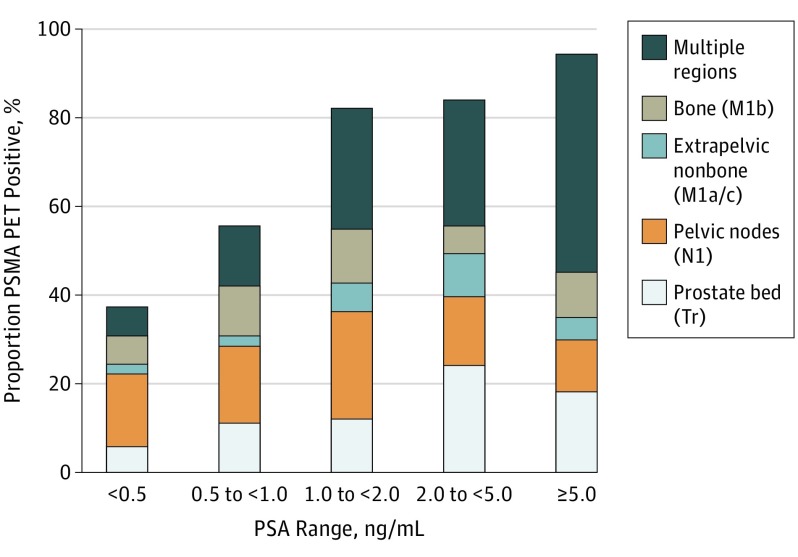
Even though I recognized going into the scan that, at my PSA level (0.37 ng/mL), there was an approximate 40% chance of detecting something, I was hopeful it would come up with something this time. Silly me and my expectations.

Detection Rate on a Patient Basis Stratified by PSA and Region Tr indicates prostate bed only; N1, pelvic nodes only; M1, extrapelvic only. Proportion of patients with 68Ga-PSMA-11 PET positive findings were stratified by PSA range and region of disease in accordance with PROMISE. https://pubmed.ncbi.nlm.nih.gov/30920593/

The other thing I’m beginning to wonder is if I’m in that 10% of patients for whom PSMA PET scans don’t work. (You may recall that being mentioned in this video from the PCRI: Rising PSA After Prostatectomy.) I have to dig into that more to see if it’s just PSMA PET scans that use Gallium-68 as the tracer, or if that applies to any PSMA PET scan regardless of the tracer used. I’m guessing it’s the latter.

Choline and Axumin scans are another option, but they don’t start reliably picking up cancer locations until the PSA is at 1.0 ng/mL or higher. Assuming my current PSA doubling time (6.2 months) remains steady, that means waiting another 11 months before I hit 1.0 ng/mL for those scans to have a chance of seeing anything.

I’ll be putting together my list of questions for the urologist appointment on 13 February (I’m open to suggestions). I suspect we’ll have a good discussion on subsequent PSA testing, the value of knowing where the cancer is located at this point, and when to start hormone therapy.

Again, the silver lining in this is that my scan didn’t light up like the Las Vegas strip. I need to keep that in mind.

Happy Friday!

Day 4,820 – PSA Results

Okay. I got antsy and went for my PSA test on Friday instead of next week. As expected, my PSA increased from 0.33 ng/mL on 6 December 2023 to 0.37 ng/mL on 19 January 2024.

The silver lining in that cloud is that the rate of increase slowed a bit and it didn’t increase as much as I expected it would.

Sometimes, I get too nerdy for my own good. There was a 91% increase between the May and October readings, and there was a 57% increase between the October and December readings, so I averaged the two increases (74%) and projected that this increase would land me at just over 0.5 ng/mL. This increase ended up being just 12% over the previous December reading. Fickle PSA.

I ran the numbers through the Memorial Sloan-Kettering PSA Doubling Time calculator again, using the five values from March 2023 (0.13) on. My PSA doubling time dropped from 6.7 months to 6.2 months, and my PSA velocity increased from 0.2 ng/mL/yr to 0.3 ng/mL/yr since calculating it back in December.

I went for the test early because I really wanted to know the PSA value going into the PSMA PET scan that’s scheduled on 31 January 2024. Plus, if it dropped, I would have had time to ask the urologist if it was worth going ahead with the scan at a lower PSA level. (Remember, I went for a PSMA PET scan when my PSA was 0.22 ng/mL, and it didn’t show anything at that PSA level. Why subject myself to another dose of Gallium-68 if the outcome may not produce any useful information?)

My follow-up with the urologist to review the PSMA PET scan and PSA results is on 13 February, and we’ll map out what’s next from there.

So that’s the latest and greatest. More to come.

Header image: The famous Torrey Pines Golf Course, San Diego, California, home to the Farmers Insurance Open golf tournament

Androgen Deprivation Therapy and Prostate Cancer

With androgen deprivation therapy (ADT) a near certainty in my future, I’ve been trying to get smarter about it. In my research, I came across this video from Dr. Eric Small at the University of California San Francisco (UCSF), that gives an introductory overview of ADT.

If you’re not familiar with some of the lingo and drug names, it may be like taking a sip of water from a fire hose, but Dr. Small gets the concepts across pretty clearly.

After watching the video, my pea-sized brain came up with what may be an oversimplified, imperfect analogy that may make Dr. Small cringe. (I’m happy to be corrected if this analogy is out to lunch!)

We know that prostate cancer needs testosterone to survive and grow, and the testes and adrenal glands both produce testosterone. So how do we cut off the supply of testosterone from those two sources to the cancer cells?

Imagine that the cancer is your backyard swimming pool (even a kiddie pool). Pools (cancer cells) need water (testosterone) to do what they do best. Your testes are one hose that fills the pool, and your adrenal glands are the second hose that fills the pool.

If we don’t want water (testosterone) in the pool (cancer), we shut off the spigots on the hoses to stop the flow. To turn off the spigot from the testes, we use one set of drugs (Lupron, Eligard, Zoladex, Firmagon, or Orgovyx). To turn off the spigot from the adrenal glands, we use a different drug, Abiraterone.

But there’s another way to stop the pool from getting water, and that’s to place a watertight cover over the top of it. That’s what the antiandrogen drugs do—they cover the pool and stop the water from getting in. These drugs are Flutamide, Nilutamide, Bicalutamide, Enzalutamide, Apalutamide, or Darolutamide.

ADT blocks the production of testosterone and antiandrogen drugs prevent the cancer cells from receiving the testosterone.

I’m sure more research is in my future, and I’ll be certain to share what I learn. In the meantime, don’t giggle too much at my analogy.