

Well, it didn’t take long for last week’s mini vacation to the Eastern Sierra to chase autumn colors to wear off. This article—a distilled version of the original paper—appeared on one of my timelines shortly after I returned. It shows how quickly and how pervasively some of the significant metabolic side effects of ADT + ARPI therapy appear.
Metabolic Syndrome Rises After Prostate Cancer Therapy
I found the full paper here:
Metabolic dysfunction after initiation of androgen receptor pathway inhibitors in prostate cancer
Within “metabolic syndrome” are:
- Obesity,
- Insulin resistance (IR)
- Hypertension (HTN)
- Dyslipidemia (unhealthy or unbalanced level of lipids (fats), such as cholesterol or triglycerides, in your blood)
It’s interesting to see that, within 90 days of starting the combination ADT + ARPI therapy, about 15% to 20% of men are experiencing one or more of these side effects, and that number only grows over time, reaching nearly 35% to 40% after a year on treatment.
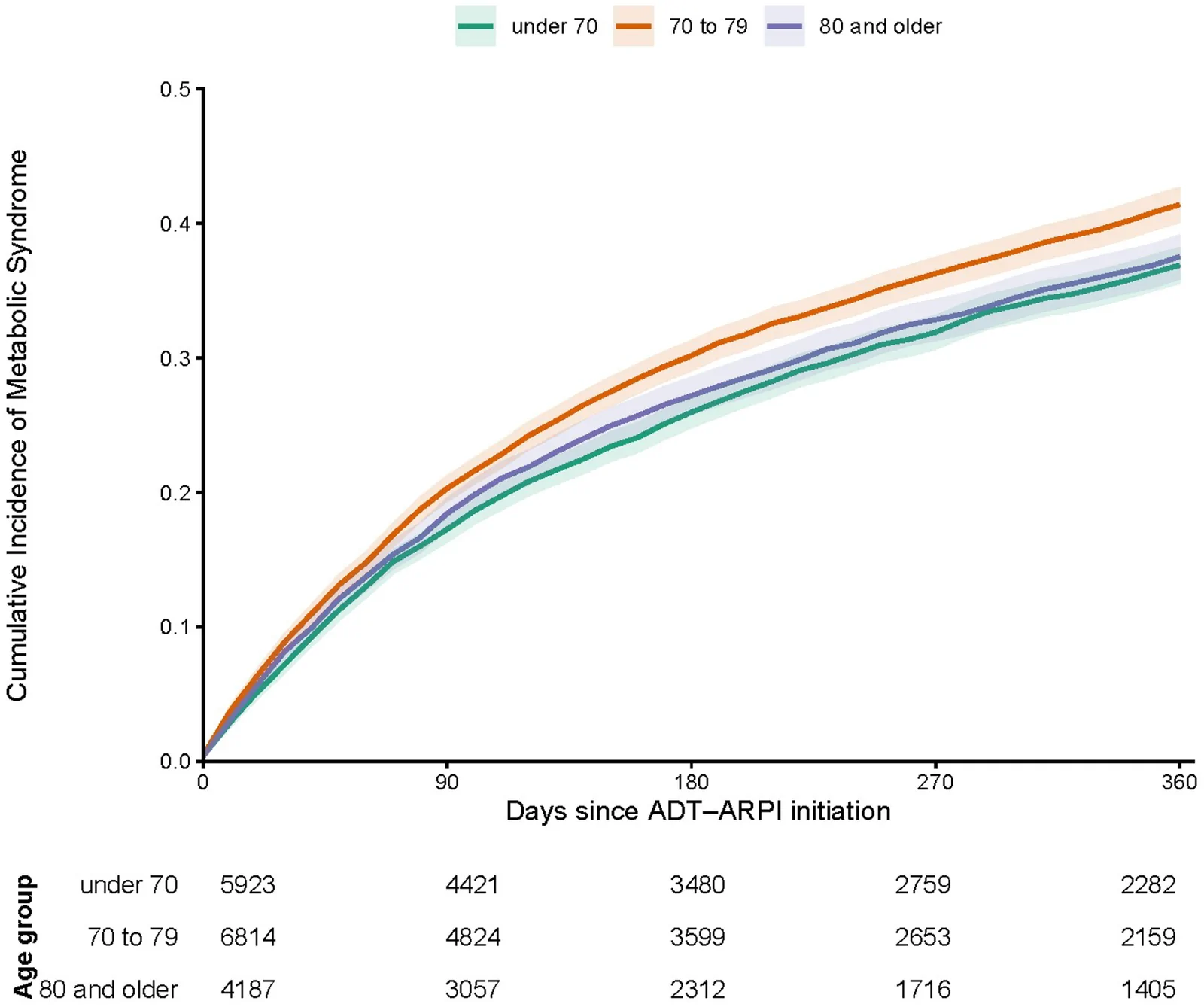
Shaver AL, Zarrabi KK, Nikita N, Sharma S, Wen KY, Lu-Yao G. Metabolic Dysfunction After Initiation of Androgen Receptor Pathway Inhibitors in Prostate Cancer. JAMA Oncol. 2026 Aug 13:e262790. doi: 10.1001/jamaoncol.2026.2790. Epub ahead of print. PMID: 42593785; PMCID: PMC13474095.
“Hypertension was the most frequently documented outcome,” and that concerns me a bit, as I’m already being treated for hypertension. My blood pressure is currently averaging 106/76, so it’s well-managed on my current treatment plan. It’s a discussion that I’ll have to have when we get to that decision point.
A good follow-up study to this one would be to track how quickly and how far these metabolic syndrome side effects dissipate—if at all—once ADT + ARPI is stopped (i.e., during a hormone therapy holiday).
Be well!
Header image: Minarets near Mammoth Lakes, California

