Okay. A little explanation is required. I started writing this post back in June and found myself working on it into July and then just sitting on it through August. It’s not that I thought the content wasn’t worthy, it’s just that I wanted to keep tweaking it and tweaking it. Enough. Before getting into the original post, here’s a more normal update on what’s next in tracking my prostate cancer.
Update
I’ve penciled into my calendar my next PSA test next week. It will be interesting to see if it continues to increase at a slower pace or return to a faster climb. Once I have the results and PSA doubling time calculated, I’ll contact the medical oncologist (MO) to see what our next steps should be.
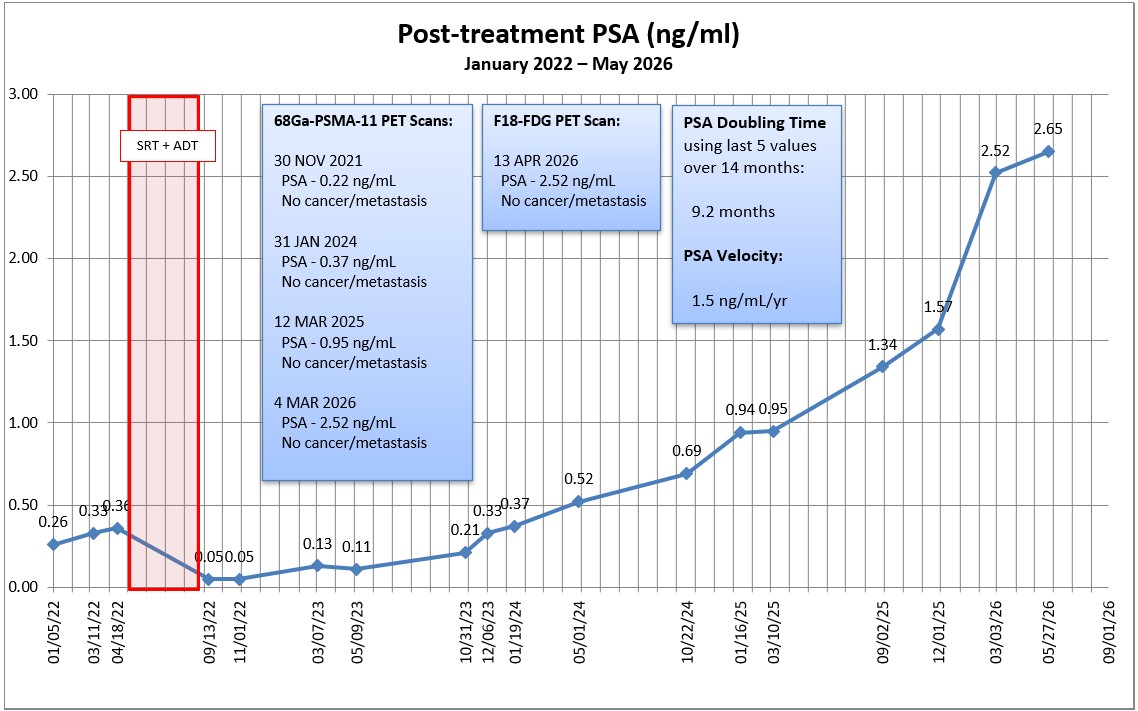
You may recall that the original plan was to do a CT scan which I have scheduled 23 November with a follow-up with the MO on 8 December. The PSA results may dictate that we reevaluate that plan and do something sooner.
Of course, the MO was all hot-to-trot to put me on intermittent Eligard + enzalutamide back in June, and I’m guessing they’ll continue that recommendation. Part of the research that I’ve done does seem to confirm that starting that combination therapy earlier has shown delay time to metastasis, so I’m seriously considering it knowing the likely side effects that come with it. I’m all ears from those who may have insights.
I hope to get back on my regular posting schedule in September, which is Prostate Cancer Awareness Month.
And now, our featured presentation…
Hourglass & Graveyards
I was originally pretty excited about writing this post, because I was planning it to be a tongue-in-cheek talk about me entering what I was going to call the “ancestral death zone” by outliving the first of my six immediate ancestors (parents and grandparents). By my calculations, that milestone would have occurred on 26 May 2026.
But I goofed.
How did I learn that I goofed? By visiting graveyards.
Life Hourglass
Long-time readers of this blog may recall that, about five years ago, I shared a video of Tim Urban’s TED talk on procrastination. In it, he developed a graphic representation of a 90-year life in the loose form of an hourglass. Of course, you know by now that this spreadsheet nerd had to create my own version. Each horizontal row represents a year lived, each vertical column represents one week in that year, and the blue cells are the weeks that I’ve lived so far.
In order for me to determine if I was entering the “ancestral death zone,” I had to calculate and plot how many weeks each of my ancestors lived. I also threw in the average of all of them and the life expectancy of a U.S. male and plotted them in different colors on the hourglass.
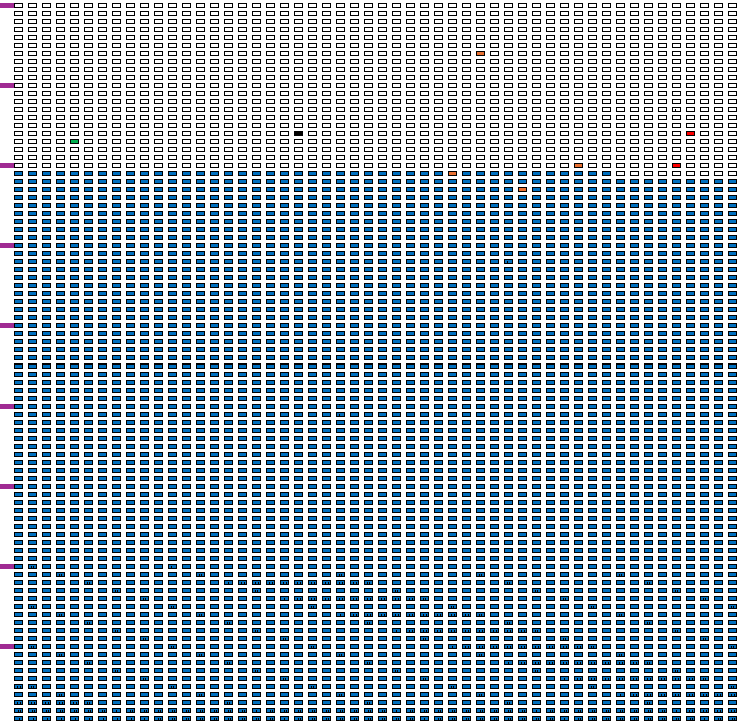
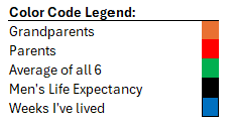
The hourglass is visually impressive, but the spreadsheet nerd in me had to take it one step further. I calculated how many days each of my ancestors lived, and then figured out the specific day that I would theoretically check out of this world if I lived as many days as each of them did. A hard “deadline” date packs considerably more “Oomph” than a grid of colored squares.
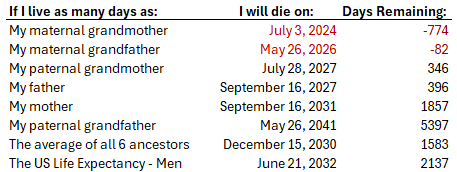
You can see that I’ve already outlived two of my ancestors but, because of my error, I didn’t realize that until recently. How did I discover the error? Well…
Graveyards
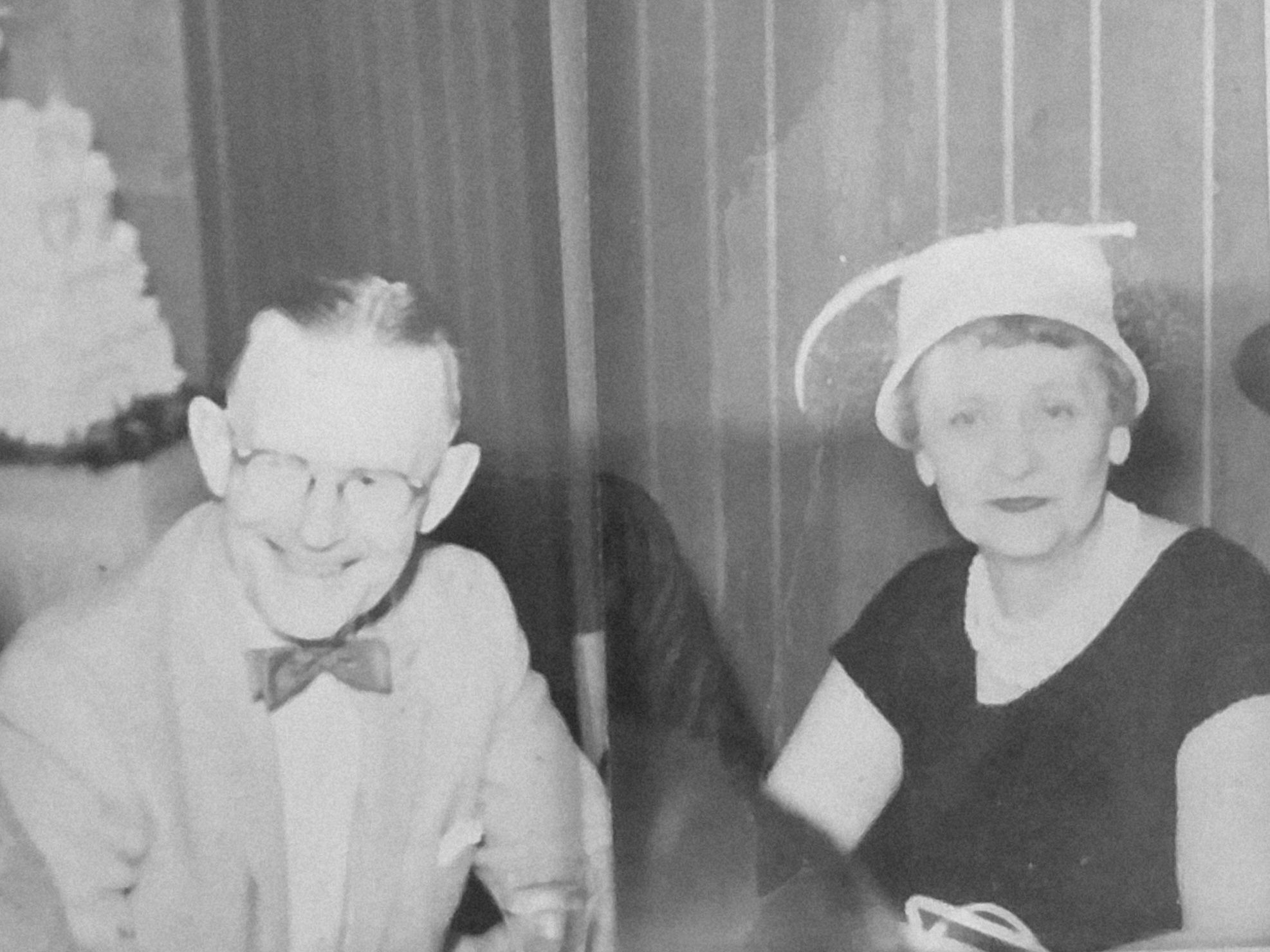
A few months ago, my sister asked me to see if I could find a particular photo of our father. I couldn’t, but what I did find was a map of the cemetery where my maternal grandparents were buried, with a handwritten note from my mother showing the approximate location.
My grandfather died in 1963 and my grandmother died in 1971 (I was five and thirteen years old, respectively). I hadn’t been to their graves since the mid-1970s before heading off to college, and I had only a vague recollection of their exact location.
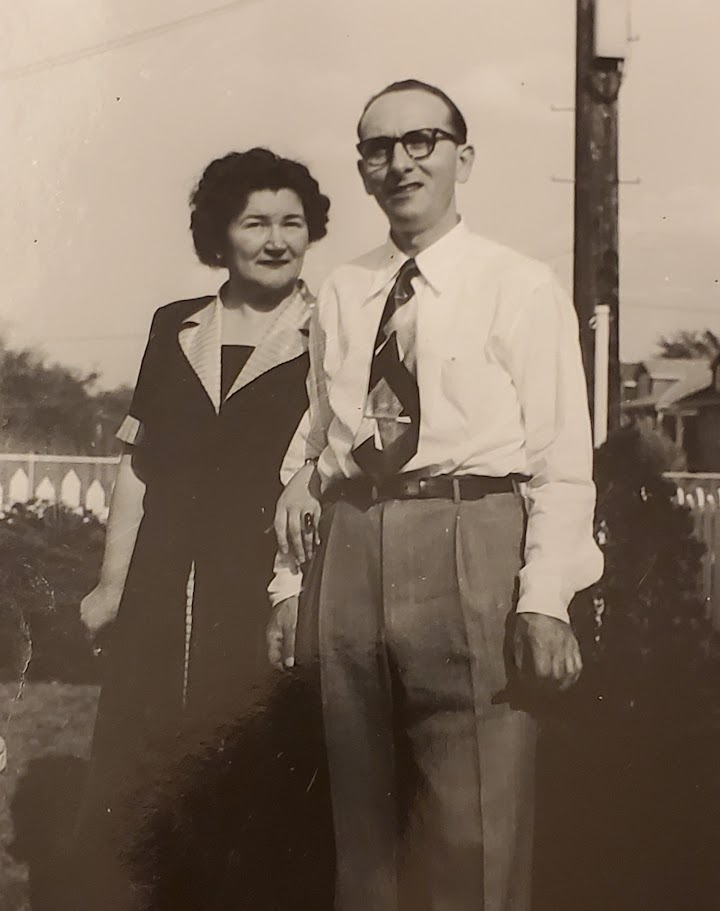
That made me think about my paternal grandparents’ graves, too. I knew the cemetery and their general location as well. My paternal grandmother also died in 1971—three weeks before my maternal grandmother—and my grandfather died in 1987. It had been decades since I had been to their graves, too.
During my trip back to Chicago in May, the geography nerd in me decided that I was going to find their graves and actually map them in Google Maps and in an app called What3Words1 so that other family members would know their location. (I also mapped other family members’ graves, too.)
It was during this graveyard scavenger hunt that I discovered that I had my maternal grandmother’s birth year wrong—the one that I used in my hourglass calculations. She was actually born in 1905, not 1901, which meant that I had already outlived my first ancestor and entered the “ancestral death zone” two years ago.
That discovery was a bit of a pleasant surprise—I have already outlived two of my ancestors—but it also took the wind out of my sails for the timing of this post.
Thoughts on the Life Hourglass
One of the main lessons from Tim Urban’s talk was that life moves on whether we want it to or not, and it’s important to take advantage of the time that’s given to us. Yes, it’s cliché, but there’s always a bit of truth in clichés.
Introducing “cancer” to your vocabulary forces you to look at your own mortality, at least during the initial weeks after the shock of the diagnosis. Now, almost sixteen years into this and better educated, I know that I’ll likely die with prostate cancer and not from prostate cancer. But with each failed treatment and each increase in my PSA, that calculation changes just a tad.
Some may view this exercise of creating the life hourglass and calculating death dates as bordering on morbid (or nuts), and that’s okay. I found that it gave me a unique perspective and a reason to be a bit more proactive in pursuing things, from last year’s bucket list trip to New Zealand, to just saying “yes” to everyday opportunities more frequently. (Or, conversely, giving me a reason to say “no” to things that may not be the best use of my time.)
Having this perspective can also make you question things about your time remaining. If I take one or two big trips per year, where will I go to out of all the possible places in the world? If I see friends or family once or twice a year, how many more times will we see each other? That scrutiny has you evaluating your priorities.
From the day we pop into this world, none of us knows when our time will end. Period. My nephew only lived a week, and two of my great-grandparents lived into their mid-90s. We just don’t know.
There isn’t a lot of longevity in our family, with average age at death for my six ancestors at 72.9 years. Dad died at 69 and his mom died at 69, with dad outliving his mom by 50 days. I’ll be 69 early next year and hope to break that trend but, if I don’t and I live 50 days longer than dad, I’ll be checking out on 5 November 2027. That’s not that far away.
While it may seem as though I dwell on this topic, I truly don’t. I don’t plan on going anywhere anytime soon. But, at this point in my life with cancer refusing to succumb to what we’ve thrown at it so far, I’m just a bit more pragmatic about it.
Again, no one and no goofy spreadsheet can predict when it will happen, but we do know it will happen at some point. Accordingly, I’m beginning to take steps that will make it easier for my family members to deal with my affairs once I’m gone (e.g., getting files in order, slowly clearing out things in the house that I haven’t used in ages, etc.). (Remember, I’m single and they live 2,102 miles / 3,383 km away from me.)
Thoughts on Graveyards
When I was in the Navy, I was stationed in Newport, Rhode Island, and I loved the history of being in a town that was founded in 1639. It was interesting to pop into a cemetery and look at some of the 300+ year-old headstones. Some were very basic, and others told a short story about the deceased. An hour and a half away in Boston, you could visit the graves of Paul Revere, Samuel Adams, and John Hancock, key figures in the American Revolution.
One thing I noticed as I wandered through all four of my ancestors’ cemeteries was the inequities even in death. Some graves had simple bronze or granite markers flush with the ground; others were a bit larger, but still modest; and then there were graves marked with towering obelisks on ornate bases that rose 20 or 30 feet (7 – 10 meters) above the ground. Yet, despite the differences in status above ground, the people beneath each of those markers were in the exact same condition. (One of the appeals of a national military cemetery to me is that, whether you were a seaman recruit or an admiral, you get the same headstone.)
This exercise made me think about the whole concept of burials and cemeteries in general.
Obviously, burials have been going on for thousands of years and, in some faiths, it’s a necessary step that’s part of the transition to the hereafter. I also understand that a burial can give a family closure, as well as a means to honor their loved one. Other cultures prefer cremation over burial.
Two of the four cemeteries that I visited were very well kept, and the other two needed some attention to varying degrees. In an older section near my paternal grandparents’ graves, headstones were leaning or simply toppled over. In the cemetery of my other grandparents, the asphalt roads were decomposing into gravel and the grass was in need of cutting.
Perhaps it was a pang of guilt for not having visited some of these graves in more than 50 years that made me ask the question, “Why? Why be buried and have a marker if it’s going to be ignored and neglected over the years?”
Realistically, it’s likely that the spouse, children, or siblings of the deceased are the ones who are going to visit and maintain the grave. But after that, I suspect the grandchildren will likely have little interest and, after them, the marker is just something someone a few decades or centuries later may stand over and ask, “I wonder who this Dan guy was?”
I’m guessing that’s why graves are leased in many countries. In my grandparent’s home country of Germany, you lease a grave for up to 30 years.2 If the family doesn’t keep up with the rent or renew the lease (if allowed), the headstone is removed and someone else is placed in the grave. (Apparently, burials are to be done in such a way where the coffin and body decompose to facilitate putting someone new on top of you. Alternately, your bones may also be removed and placed in an ossuary.)
On the one hand, I would like to think that we keep our departed ancestors’ memories alive in our hearts and minds—I think of my parents daily—and that’s how and where we should reminisce about them. We shouldn’t need to stand over a grave to remember them. Yet, on the other hand, as I visited each of the graves, I felt a stronger connection to them just by standing there and being in their presence.
I also understand our own inherent desire to leave behind some evidence that we existed and that we hopefully made a positive difference in the world. But, realistically, the world remembers the actions of Paul Revere, Samuel Adams, and John Hancock, not their headstones. Their graves are just a historical footnote to their stories.
So what does all of this mean for me? I know that I want to be cremated; it’s just figuring out what to do with me afterwards.
Having my ashes scattered at sea (Navy veteran, duh) has been on my list for a long time, but I also love hanging out in the mountains and have thought about being scattered there instead. Then there’s the issue of having a marker of some sorts. If I feel compelled to have one, where would it be and what would it look like?
I have thought about national cemeteries as a possible option, and there are two here in San Diego.
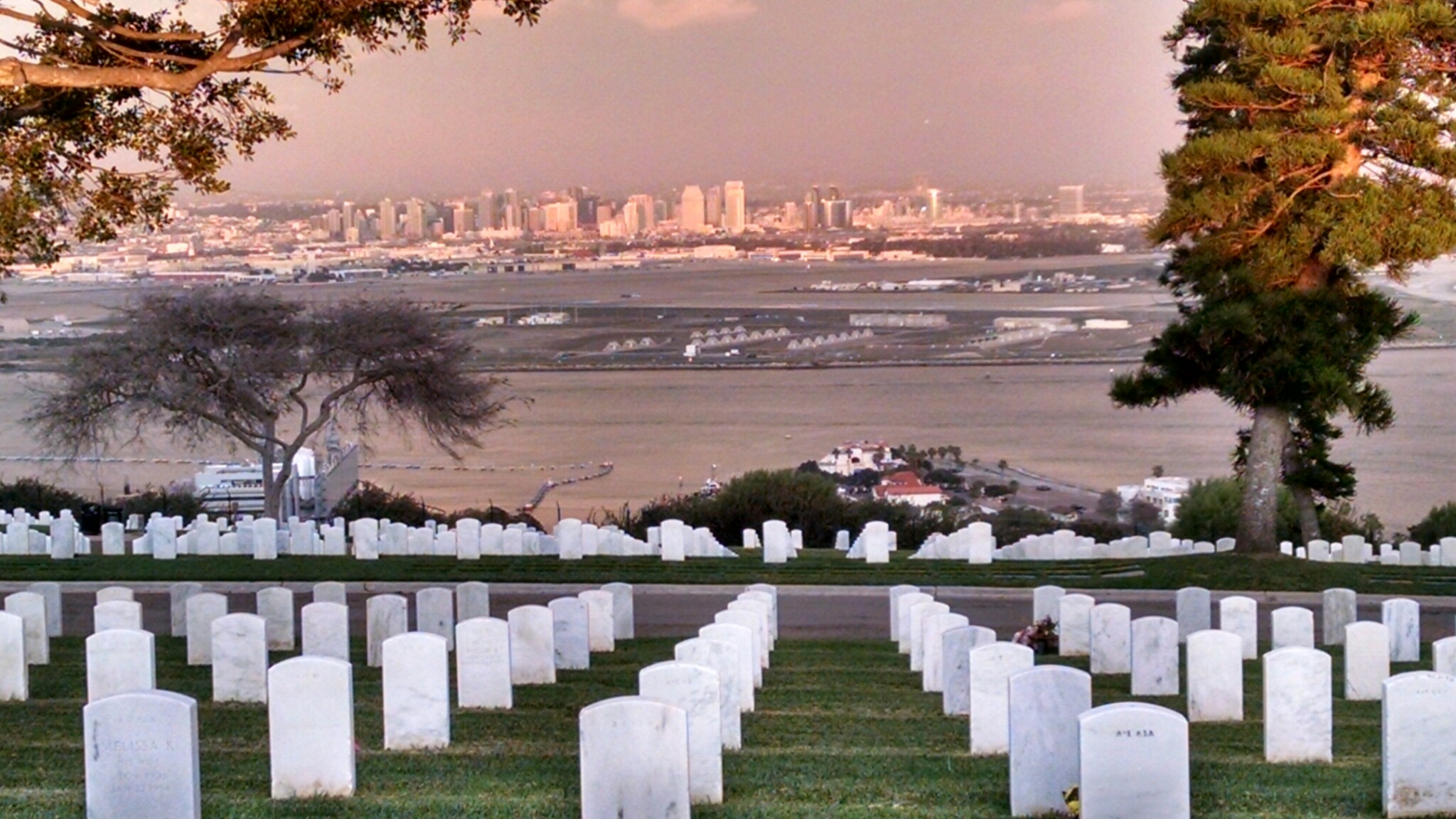
The first is Fort Rosecrans National Cemetery high atop a bluff on Point Loma overlooking both the Pacific Ocean and San Diego Bay. Unfortunately, with over 101,000 souls already buried there, the cemetery is full and isn’t accepting new interments for either caskets or the columbarium.
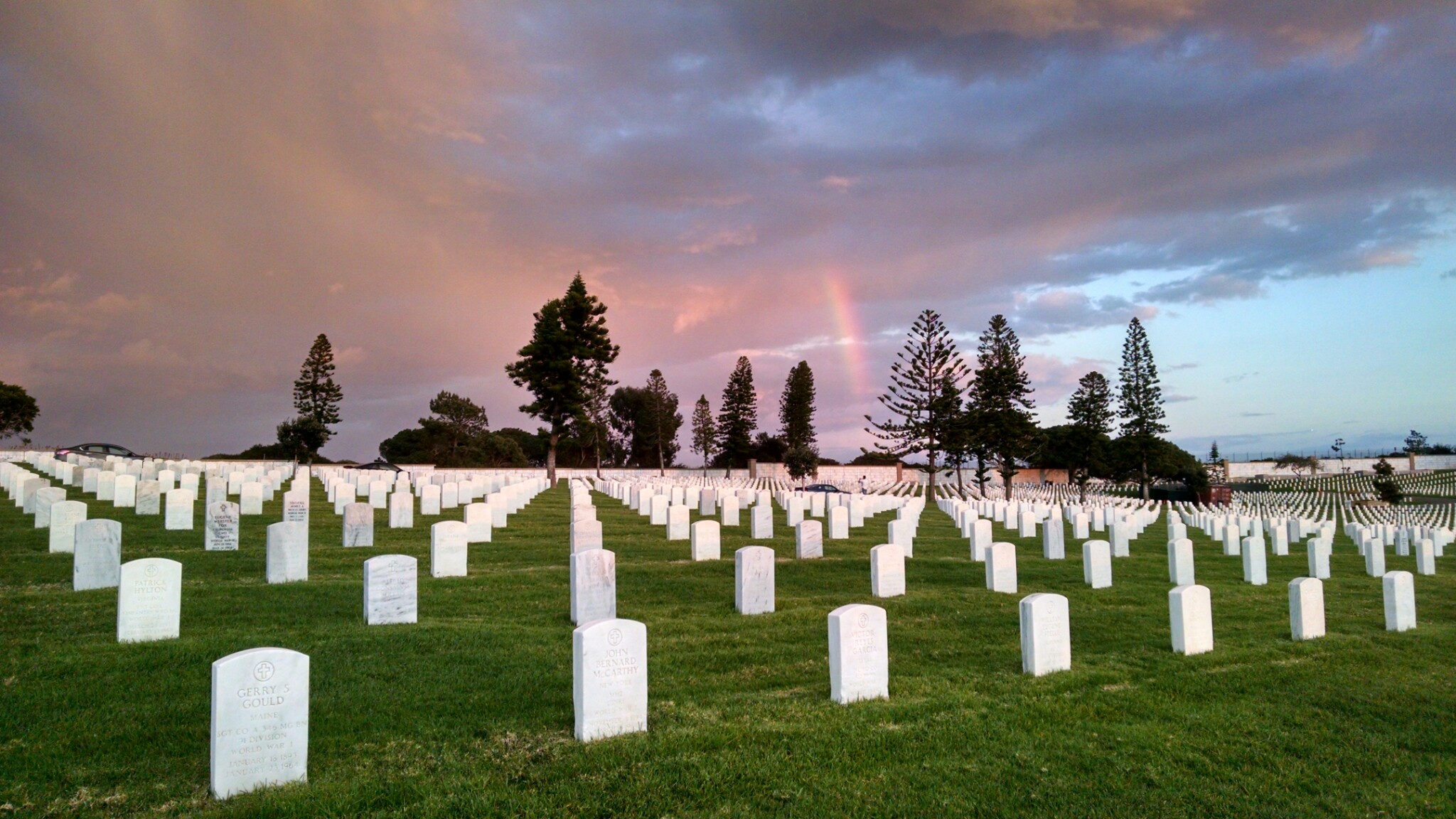
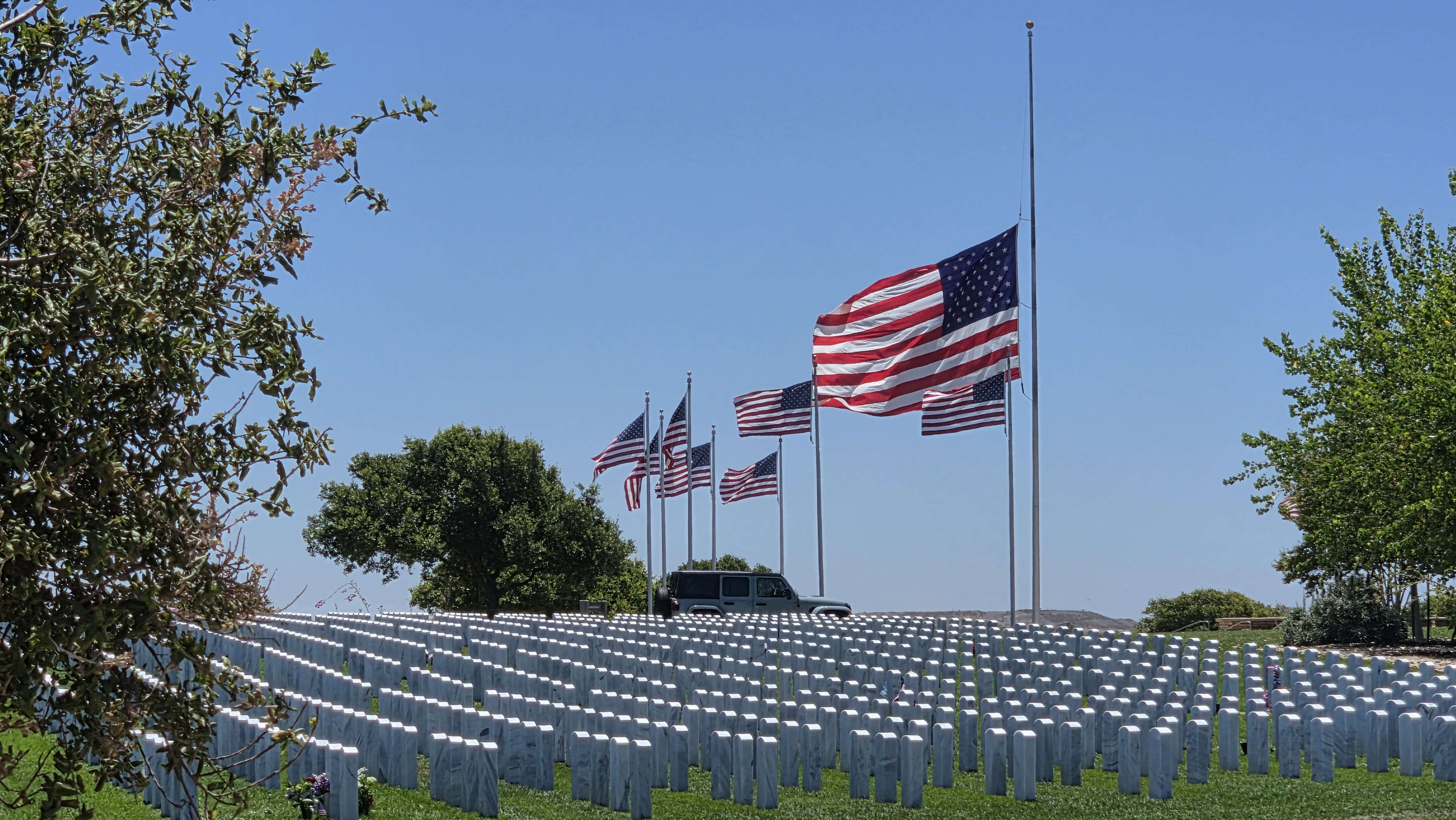
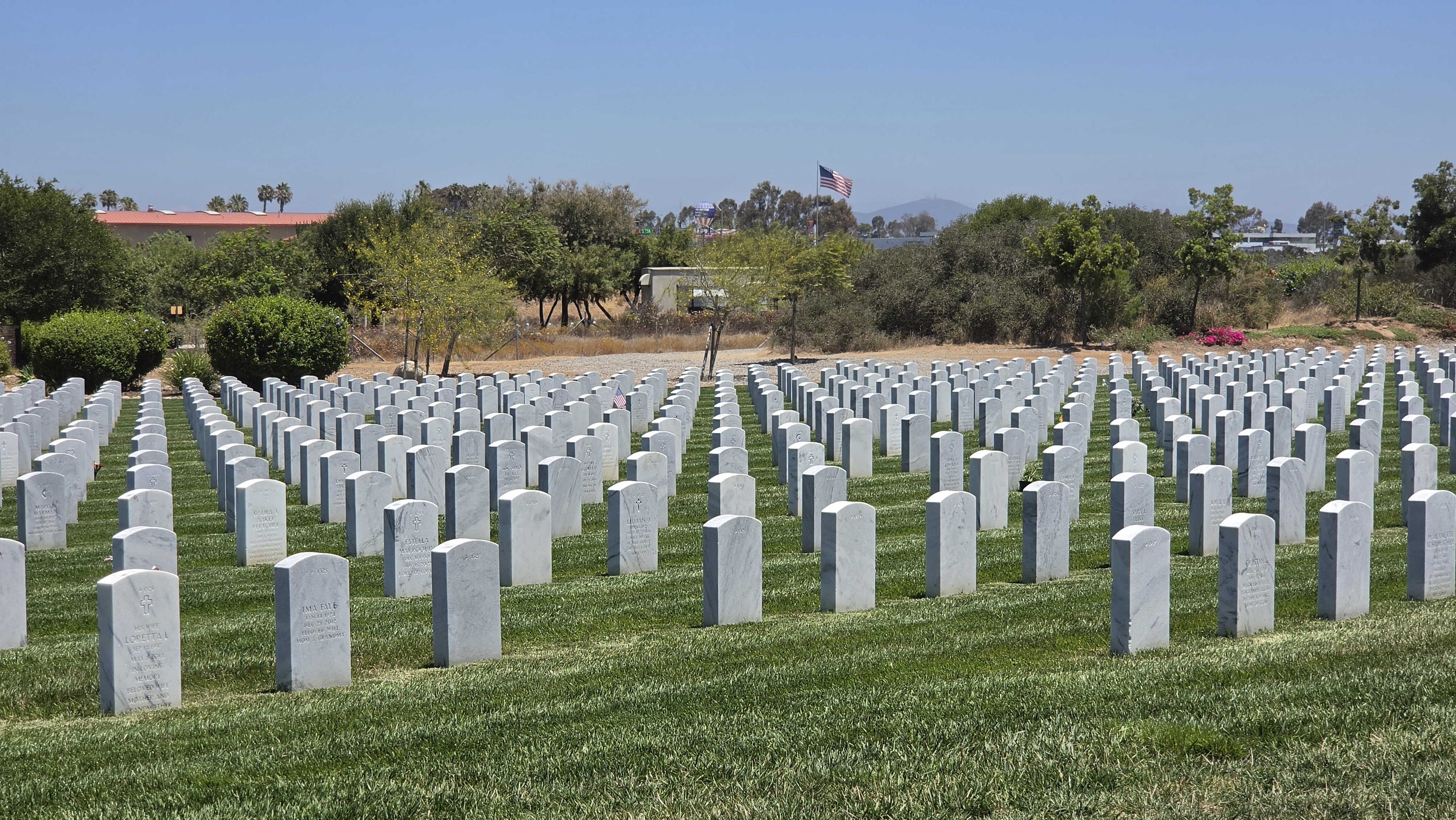
Miramar National Cemetery opened in 2010 and is inland, located adjacent to Marine Corps Air Station Miramar so you get to listen to military jets taking off for eternity.
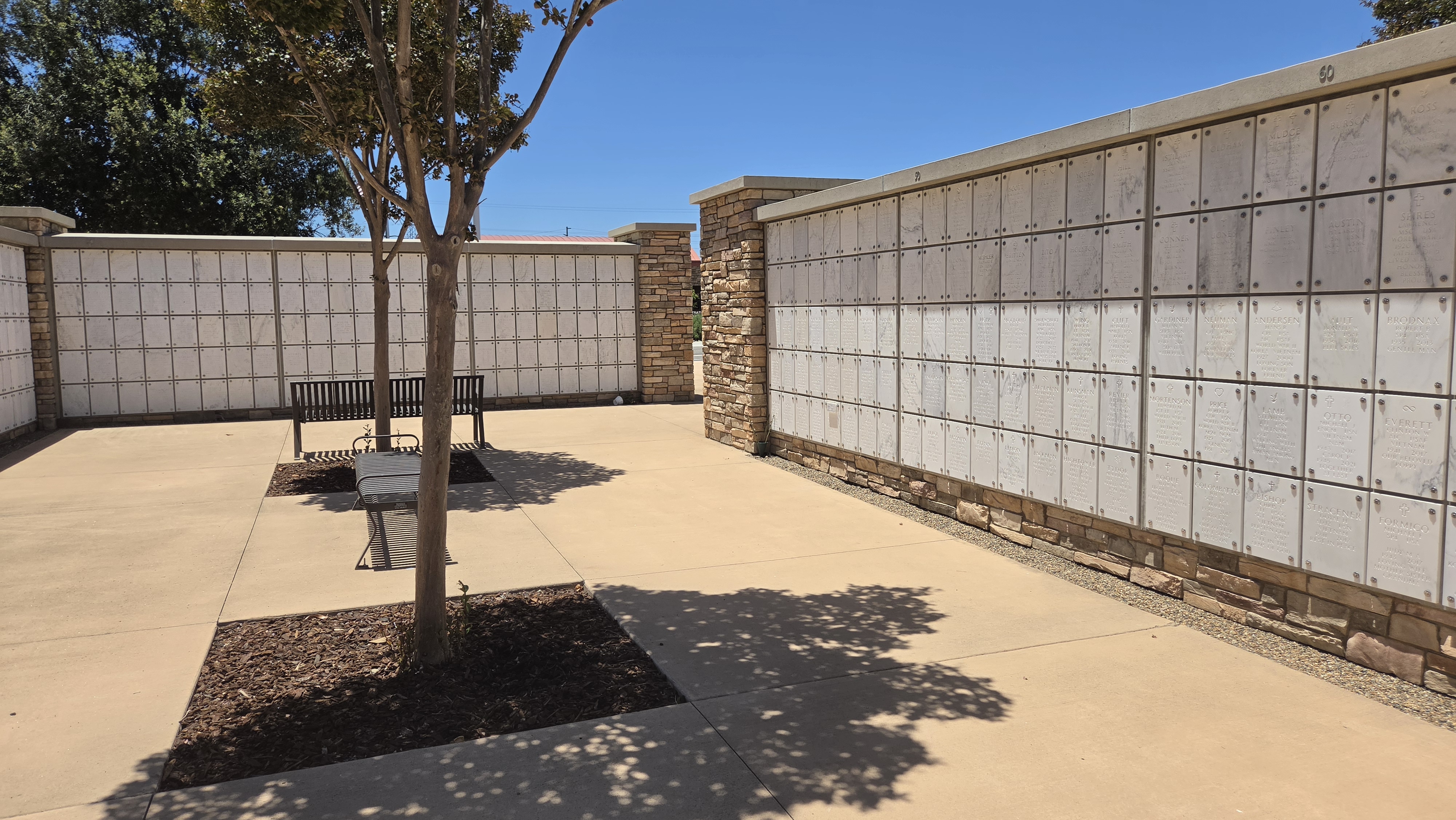
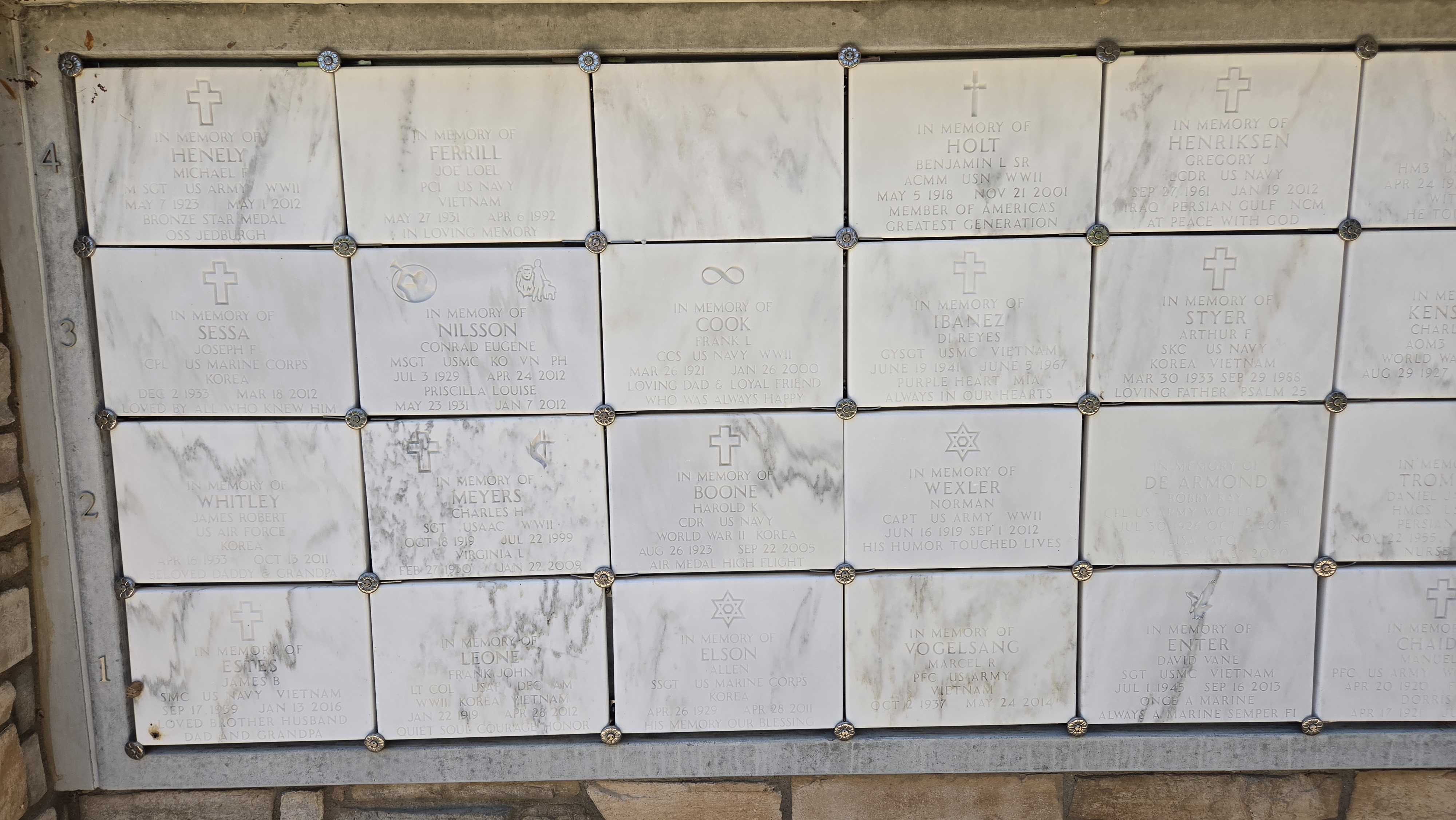
The columbarium at Miramar was about what you would expect it to be, but I have to admit that the niches were larger than I thought they needed to be. The niches gave me the feeling of being shoved in a drawer and sealed, and I didn’t find that all that appealing. The cemetery did, however, have a section for memorial plaques, presumably for those whose ashes were scattered elsewhere. I’ll have to check into that as an option if I want one.
Of course, I can change my mind at any time, and my final decision will land in my When I’m Gone binder with all the instructions for my family members, and not here on the blog.
We all know that day will eventually come, so it really shouldn’t be uncomfortable or even taboo to talk about it and what we want to have happen. Yes, I may have taken it to an extreme with the hourglass and date calculations, and that’s okay. If we plan ahead, it will ease the burden on those left behind during one of their most difficult times.
Maybe this has given you some food for thought and, more than anything, just remember:
The clock’s a-tickin’.
Be well!
1 What3Words is a website/app that divides the entire world into three meter by three meter squares and assigns a unique three word address to each square. If you have the three word address, you type it into the website/app and it will display that specific square on the map.
2 Depending on the grave type, the family will have to pay $40 to over $300 per year for the lease. The family is also legally required to maintain the grave, so they either do it themselves or hire a grave gardener.
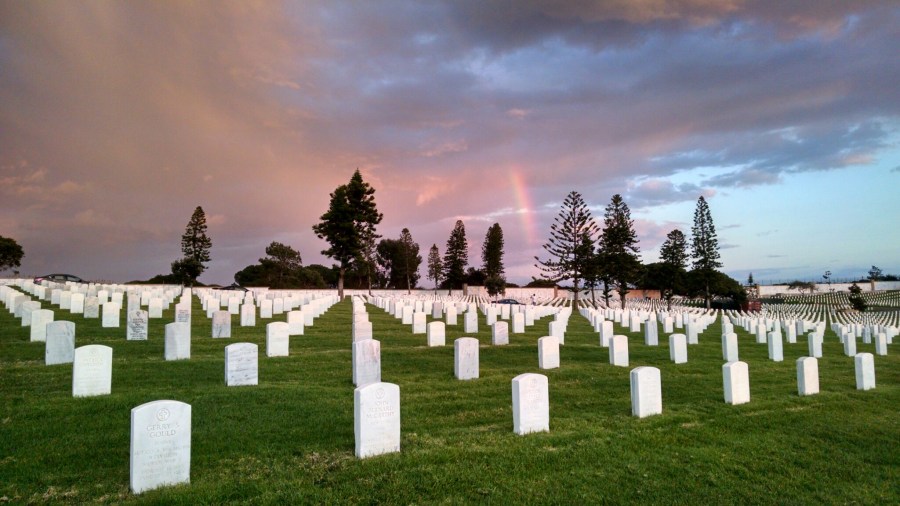
Header image: Fort Rosecrans National Cemetery, San Diego, California


Hi Dan, if you can, try to get enzalutamide replaced with darolutamide because of its lower incidence of side effects. Look into the various forums; there are many posts about this topic.
LikeLiked by 1 person
Thanks. I’ve spent pretty much the last month or so digging into this, and darolutamide is one that keeps popping up for the reasons you mentioned. From what I’ve read, darolutamide seems to have a higher incidence of gynecomastia / tender nipples than enzalutamide. In the end, it’s all a compromise between efficacy and what side effects we’re willing to risk / tolerate.
LikeLike
Hi Dan, I don’t think it causes gynecomastia when used together with ADT. Maybe when used as monotherapy, but that’s the case with all the other ARSIs as well when they are used as monotherapy.
LikeLike
My wife and I love visiting cemeteries pretty much everywhere we go, and have especially fallen in love with many of the wild tumbledown cemeteries found here & there around the world, from the funkier corners of Pere Lachaise, to the less kempt members of London’s Magnficent Seven cemeteries – particularly Abney Park. Here, stones are in various states of returning to nature, stacked and tilted and jumbled in various stages of decrepitude. Restful wild memorial gardens suffused w/ Wabi Sabi, Shibui, Mono No Aware, capturing that plangent sense of our fond desire to remain, and the beautiful evanescence of passing. I recommend!
LikeLiked by 1 person
Thanks for sharing your insights and perspective. I hadn’t heard about the Magnificent Seven cemeteries, to I had to do a quick search on them to learn a little more about them.
LikeLike
Hi Dan, thanks for another interesting post from you. Historically in Scotland people were buried after a church service and then cremations took over but there was still a service either in a church, in the crematorium buildings or at the graveside for those who still wished to be buried. In very recent years there has been a trend towards “pure cremation”. The body is collected by the undertaker and taken to the crematorium without any attendance or service and the ashes then returned to the next of kin to do what they wish or what the deceased wished for them. I already know people who have gone down the pure cremation route. It’s cheaper, less distressing for those left behind. At the moment I am already booked for a service and cremation. Four of my good friends have recently changed from the same – service and cremation. My wife’s cousin had a pure cremation two years ago and my wife also has said she wants a pure cremation. I’m considering my options. We don’t do open caskets nor do we have the blood removed and preservative chemicals injected which – based purely on TV and films seems to be quite normal in the USA. Even for those buried there are now graveyards where the deceased is buried in a wicker basket coffin and instead of a headstone a tree is planted above and only a very small marker is evident at ground level. It is interesting to see the cultural variation that exists over the world and how changes continue to take place. I’m giving up on the idea of an Egyptian pharaoh’s Pyramid.
LikeLiked by 1 person
Hi Charles,
Thanks for sharing your customs and how they’re evolving in Scotland. As I researched the notion of burials for my post, I was really struck by how many different traditions there are, and how the U.S. seems to be the outlier with its “for eternity” graves.
I’ve got mixed feelings about the open casket wake/viewing. Some family members really seem to need it for closure, while others want to remember their loved one in better times.
I also have a small environmental component to my desire to be cremated—why take up valuable real estate and, as you noted, have my formaldehyde-laden body planted in the ground?
BTW, I laughed out loud at your pyramid comment. 🙂
All the best to you.
LikeLiked by 1 person
Thanks, Dan. This is rather a different blog and thought-provoking in several ways.
I’ve long believed that filling swathes of land with billions of parcels of human bodies is an unnecessary indulgence. However, like ‘publicbiblio’ I have occasionally wandered around ancient church graveyards, reading the names, dates, and legends. And there are many ancient churches in England.
Cremation it will be for me, and I’m struck by the ‘pure cremation’ ceremony that Charles McGill mentioned. I shall look into that further.
The calculation of your death day projection was interesting but I suspect it wouldn’t work for me, the data will be incomplete and with a wide margin of error. My mother was 78. My father, 84, but he and his brother had managed to set fire to their house, which complicates things. My maternal grandfather was 76, but his wife lived to 104, just to skew the figures.
On the paternal side, my grandfather was 85. I have no clue as to my grandmother beyond her name Anna Andrejewska, and her birth year, 1885 in Lithuania. I suspect that WW2 played a part in her death, with her country being attacked and ravaged by both Germany and Russia during those years.
So that messes up the calculation, but … I think I’ve got another few years. Fingers crossed.
LikeLiked by 1 person
Hi Al,
Thanks for sharing your own story. I, too, see burial as a bit of a waste of good land that could be used for something better. And, as you already know from the post, find it interesting to wander through the oldest of our cemeteries (mainly on the east coast).
I hope you’re doing well.
Dan
LikeLike